A cordless tire inflator is best for quick pressure top-offs, seasonal tire checks, bike tires, sports balls, and emergency use when you do not want to drag out a cord or hunt for a gas-station air pump. The right model depends less on brand name and more on pressure accuracy, hose design, battery platform, speed, portability, and whether you need it mainly for car tires, bicycles, or mixed household use.
For most homeowners, the sweet spot is a compact inflator with a digital pressure setting, automatic shutoff, a readable light, and enough power to top off standard car tires without overheating. If you also maintain bikes, strollers, wheelbarrows, and sports gear, included nozzles and a better hose/chuck design matter just as much as raw PSI claims.
Who should buy a cordless tire inflator?
A battery-powered inflator makes the most sense if you want a fast, low-hassle way to maintain air pressure at home. It is especially useful for:
- Car owners who want to keep tires properly inflated between service visits
- Families with bikes, scooters, strollers, and sports balls
- Homeowners with seasonal equipment like wheelbarrows, small trailers, and lawn carts
- Drivers building an emergency kit for road trips and cold-weather pressure drops
If you regularly air up large truck tires, RV tires, or multiple tires back-to-back, a larger 12V compressor or shop-style inflator may be a better fit than a small cordless unit.
What a cordless tire inflator does well
The main strength of a cordless tire inflator is convenience. It is ideal for topping off a tire that is a few PSI low, not for high-volume air tasks. That distinction helps set realistic expectations.
| Task | Usually a good fit? | Why |
|---|---|---|
| Topping off car tires | Yes | Fast enough, portable, easy pressure control |
| Bike tires | Yes | Very convenient with the right valve adapter |
| Sports balls and inflatables | Yes | Simple with included accessory nozzles |
| Emergency low-tire inflation | Usually | Good for minor pressure loss if battery is charged |
| Large SUV, truck, or trailer tires | Sometimes | Works, but may be slow depending on tire size |
| Air mattresses and pool toys | Sometimes | Many tire inflators are high-pressure, low-volume tools |
| Shop air tool use | No | Not designed for continuous airflow or pneumatic tools |
How to choose the best cordless tire inflator
If you are comparing options, focus on how the inflator will actually be used around your house and vehicles. These are the buying factors that matter most.
1. Match the inflator to your main use case
Start with the tires and items you will inflate most often.
- Mostly cars and crossovers: prioritize accuracy, auto shutoff, hose reach, and stable battery life.
- Mostly bikes: check valve compatibility and whether the chuck works cleanly on narrower valve stems.
- Mixed household use: look for included adapters, onboard storage, and simple presets.
- Emergency trunk tool: prioritize compact size, easy controls, built-in light, and reliable battery readiness.
If you are already building out a homeowner-ready setup, this type of tool pairs naturally with an essential homeowner tool kit because it solves a common real-world problem without much learning curve.
2. Do not shop by maximum PSI alone
High PSI numbers can be misleading. A cordless tire inflator may advertise a high maximum PSI, but what matters more is how efficiently it reaches normal working pressure for your actual tires. Most homeowners care more about bringing a car tire from slightly low to the correct pressure than hitting an impressive theoretical ceiling.
In practice, look for an inflator that is designed for passenger-car tires and can hold steady accuracy during top-offs. For most households, ease of use beats chasing the highest headline spec.
3. Look for digital pressure setting and automatic shutoff
This is one of the most valuable features. A digital inflator lets you set your target pressure, start inflation, and stop automatically when that pressure is reached.
That matters because it helps with:
- more consistent tire pressure across all four tires;
- less guesswork than manual analog gauges;
- reduced risk of overinflation during routine top-offs;
- faster use during cold mornings or roadside stops.
If you want a tool that feels beginner-friendly, this should be near the top of your list.
4. Check battery platform compatibility
For many homeowners, the best cordless tire inflator is the one that uses batteries they already own. If you already have a cordless drill or impact driver system, staying on the same platform can lower total cost and make the inflator more useful.
That is especially important if you have recently compared entry-level tools like an impact driver vs drill or are deciding on a first power tool for home use. Once you buy into a battery system, accessory tools often become better values.
If you do not already own batteries, compare total package value carefully. A bare tool may look cheaper but cost more once battery and charger are added.
5. Pay attention to hose and chuck design
Many inflators look similar until you use them in awkward real-life positions. Hose flexibility, hose length, and how securely the chuck connects to the valve stem can make a big difference.
A better hose setup helps when:
- the valve stem sits in a tight wheel opening;
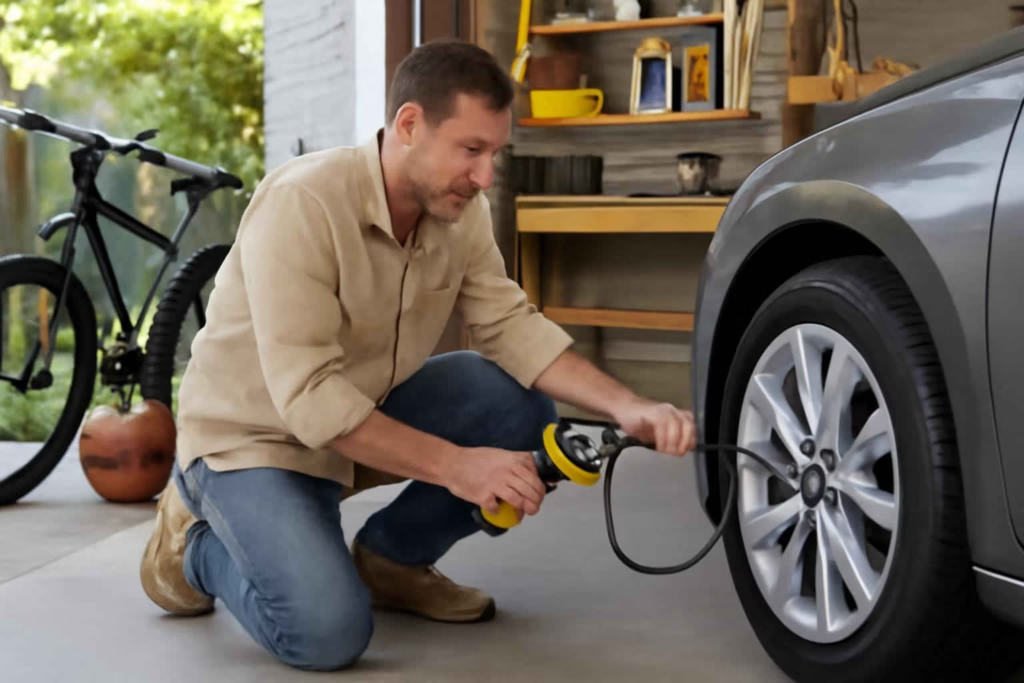
- you are kneeling on a driveway and do not want to hold the tool at an odd angle;
- you need a quick, secure connection with minimal air loss.
If you inflate bike tires often, a poor chuck design becomes even more frustrating because small-volume tires react faster to small bursts of escaping air.
6. Consider speed, but within reason
Inflation speed matters, but for homeowners it is usually secondary to reliability and convenience. If your typical job is adding a few PSI to each tire once or twice a month, a slightly slower inflator may still be the better purchase if it is easier to use and stores cleanly.
Speed matters more if you:
- maintain multiple vehicles;
- regularly deal with temperature-related pressure drops;
- have larger tires on SUVs or light trucks;
- want a tool for family road trips.
7. Built-in light and display visibility matter more than they seem
A cordless tire inflator often gets used in low-light conditions: early mornings, garages, winter evenings, and roadside situations. A readable display and built-in LED light are not gimmicks if this tool lives in your trunk or garage shelf.
Choose a model with controls you can understand quickly. In an emergency, simple operation beats extra modes you never use.
8. Know the difference between tire inflators and high-volume inflators
This is a common source of buyer disappointment. A cordless tire inflator is usually a high-pressure, lower-volume tool. That makes it good for tires and balls. It may be less effective for large pool floats, air mattresses, and other bulky inflatables that need lots of airflow rather than pressure.
If your main need is backyard inflatables, use a dedicated inflator for that job instead of expecting a tire inflator to do everything well.
Best cordless tire inflator buying criteria at a glance
| Feature | Why it matters | Best for |
|---|---|---|
| Digital pressure preset | More accurate and easier to use | Cars, bikes, general households |
| Auto shutoff | Prevents overshooting target pressure | Beginners and fast routine checks |
| Battery compatibility | Lowers total ownership cost | Homeowners already using cordless tools |
| Flexible hose and solid chuck | Easier access to valve stems | Cars, bikes, tight wheel designs |
| Accessory nozzles | Adds household versatility | Sports gear, strollers, bikes |
| Built-in light | Useful in garages and emergencies | Roadside kits and night use |
| Compact size | Easier to store in a trunk or cabinet | Emergency readiness |
Which type of homeowner should buy which type of inflator?
Choose a compact cordless inflator if you want:
- quick monthly tire maintenance;
- easy storage in a trunk or mudroom cabinet;
- one tool for cars, bikes, and sports gear;
- simple set-and-stop operation.
Choose a larger 12V or heavy-duty inflator if you want:
- faster fill times for larger tires;
- more repeated use in one session;
- a better fit for trucks, trailers, or frequent long drives;
- a dedicated vehicle emergency compressor.
Choose a garage air compressor instead if you want:
- shop versatility beyond tire inflation;
- compressed air for cleaning, brad nailers, or air tools;
- higher duty-cycle use.
Common mistakes when buying a cordless tire inflator
- Buying based only on PSI claims. Real usability, accuracy, and battery convenience matter more.
- Ignoring total system cost. A bare tool is not a bargain if you still need battery and charger.
- Assuming all inflators work equally well for bikes. Valve compatibility and chuck design matter.
- Expecting it to replace a high-volume inflator. Pool toys and large inflatables often need a different tool.
- Choosing a model with weak controls or unreadable display. That gets annoying fast during routine use.
- Leaving it uncharged in the car for months. Emergency usefulness depends on actual readiness.
Practical checklist before you buy
Use this quick checklist to narrow your choice:
- Do you already own batteries from a major cordless tool platform?
- Will you use it mostly for cars, bikes, or mixed household items?
- Do you want digital pressure presets and auto shutoff?
- Will it live in the garage, the trunk, or both?
- Do you need accessory nozzles for balls and inflatables?
- Will you use it on larger SUV or light-truck tires?
- Can you read and operate the controls quickly in low light?
If you are shopping for accessories that make routine maintenance easier, a digital tire pressure gauge and a cordless tire inflator are often a more useful pair than buying a larger compressor too early.
How to use a cordless tire inflator effectively
- Check the recommended tire pressure on the vehicle door-jamb sticker, not the tire sidewall maximum.
- Measure pressure when tires are cool whenever possible.
- Set the inflator to the target PSI.
- Attach the chuck securely to minimize air loss.
- Let the inflator stop automatically, or stop at the target pressure manually.
- Recheck pressure if accuracy is especially important.
This same homeowner-friendly approach applies to other simple diagnostic tools too, such as using the right stud finder for safer wall drilling or choosing a battery-powered tire inflator that actually matches your routine needs.
FAQ
Is a cordless tire inflator strong enough for car tires?
Yes, most cordless tire inflators are well suited for topping off standard passenger-car tires. They are best for routine maintenance and mild pressure loss, not for heavy-duty commercial use.
Can a cordless tire inflator fill a completely flat tire?
Sometimes, but it depends on the inflator and the tire condition. If the tire has a puncture, bead leak, or damage, the inflator may not solve the problem. For roadside emergencies, it is better viewed as a temporary pressure tool than a complete tire repair solution.
Are cordless tire inflators accurate?
Many are accurate enough for normal home use, especially models with digital presets and auto shutoff. If you want extra confidence, verify pressure occasionally with a separate quality gauge.
What is better: a cordless tire inflator or a 12V inflator?
A cordless tire inflator is usually better for convenience and quick home use. A 12V inflator may be better for longer run time or heavier vehicle-focused use because it draws power directly from the car.
Can I use a cordless tire inflator for bike tires and balls?
Yes, if the model includes the proper adapters. Check compatibility before buying, especially if you use Presta valves on bicycles.
How often should I check tire pressure at home?
Monthly is a practical baseline for most drivers, with extra checks during major temperature swings and before longer trips.
Bottom line
The best cordless tire inflator for most homeowners is not the one with the most aggressive marketing claims. It is the one that makes regular pressure checks fast, simple, and accurate enough that you will actually use it. Prioritize digital presets, auto shutoff, battery convenience, a good hose/chuck setup, and the right fit for your mix of cars, bikes, and household gear. If the tool is easy to grab and easy to trust, it is much more likely to earn a permanent spot in your garage or trunk.