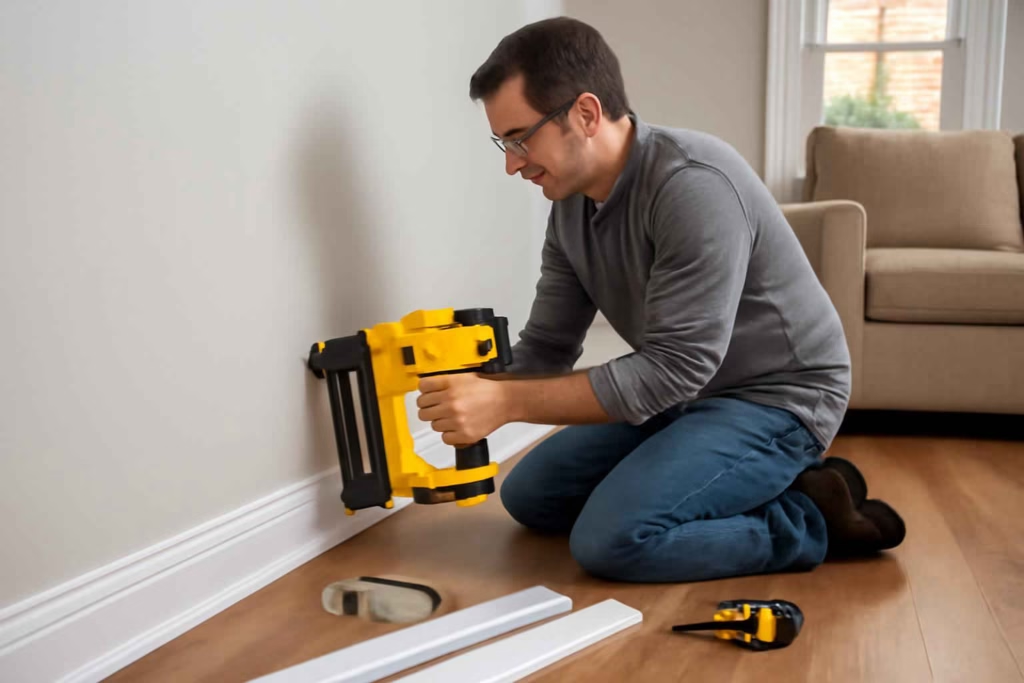
A cordless brad nailer is one of the most useful upgrade tools for homeowners who install trim, attach baseboards, build simple projects, or replace a lot of manual hammer-and-finish-nail work. The best cordless brad nailer for home use is usually the one that matches your battery platform, drives 18-gauge brad nails consistently, feels manageable overhead or along walls, and has simple depth adjustment and jam clearing.
If you only do occasional light trim work, a compact model may make more sense than a heavy pro-oriented tool. If you plan to install long runs of baseboard, door casing, or repeated room-by-room trim, runtime, balance, and firing consistency matter much more.
What a cordless brad nailer is best for
A cordless brad nailer drives thin 18-gauge brad nails without needing a hose and air compressor. That makes it especially attractive for homeowners who want faster setup and easier mobility around the house.
- Installing baseboards and shoe molding
- Attaching door and window casing
- Fastening light trim and decorative molding
- Small woodworking and DIY furniture projects
- Paneling, craft builds, and repair work
- Tacking pieces in place before glue cures
It is not the best choice for heavy structural fastening, framing, or jobs that require larger finish nails. For broader fastening needs, a bigger nailer category may be more appropriate.
Brad nailer vs finish nailer: which one should a homeowner buy?
A brad nailer is usually the better first purchase for lighter interior trim and general DIY work. A finish nailer is better when you need more holding power for thicker trim or denser material.
| Tool | Typical nail size | Best for | Main trade-off |
|---|---|---|---|
| Brad nailer | 18-gauge | Light trim, thin molding, craft and repair work | Less holding power |
| Finish nailer | Usually 16- or 15-gauge | Heavier trim, larger casing, stronger fastening | Larger hole, bigger and heavier tool |
If your projects are mostly quarter-round, small trim repairs, simple built-ins, and decorative work, start with a brad nailer. If you are regularly installing thicker door casing or larger baseboards, a finish nailer may be the better long-term buy.
If you are still building out your tool kit, Get the site name/brand name dynamically readers may also find our guide to the best first power tool for homeowners useful for prioritizing purchases.
What to look for in the best cordless brad nailer
1. Nail gauge and length range
For this category, 18-gauge is the standard. What matters next is nail length compatibility. A wider supported range gives you more flexibility across thin trim, thicker casing, and hobby builds.
For many homeowners, the sweet spot is a tool that handles common short and medium brad lengths cleanly, without struggling in hardwood trim.
2. Battery platform compatibility
If you already own cordless tools, battery compatibility can be a bigger value factor than a small difference in tool price. Staying on one platform can reduce total cost and improve convenience.
If you already own a drill or impact driver, it may be smart to stay with that system. If you are still deciding, our drill vs impact driver guide and cordless drill buying guide can help you think about platform decisions more strategically.
3. Weight and balance
Weight matters more than many buyers expect. A cordless brad nailer is heavier than a pneumatic one because the power system is built into the tool. That extra weight is manageable for short tasks, but it becomes noticeable when working overhead, moving along long walls, or kneeling through a whole room of baseboard installation.
For occasional DIY users, a slightly lighter and better-balanced tool often feels better in real use than a bulkier model with pro-level capacity you may never need.
4. Firing consistency
The best cordless brad nailer should drive nails to a consistent depth in common trim materials. Inconsistent driving slows you down and increases touch-up work. If a tool regularly leaves proud nails or overdrives unexpectedly, it becomes frustrating fast.
Consistency matters most when working with painted trim, prefinished materials, MDF, and visible finish surfaces.
5. Depth adjustment
Depth adjustment helps match nail drive to the material. Softer trim, MDF, pine, and hardwood can all behave differently. A tool with easy, accessible depth control lets you dial in the finish without interrupting workflow.
6. Tool-free jam clearing
Nail jams happen. A tool-free jam release is one of the most practical convenience features because it reduces downtime and keeps a small issue from derailing the project.
7. Dry-fire lockout
This feature helps prevent the tool from firing when the magazine is empty. It protects work surfaces, reduces misfires, and helps avoid unnecessary tool wear.
8. Trigger modes
Homeowners usually benefit most from sequential firing for controlled trim work. Some users also like bump or contact firing for faster repetitive work, but careful placement is generally more important than pure speed in finish applications.
9. Nose design and visibility
A narrow nose and good line of sight make it easier to place brads accurately on delicate trim profiles and tight corners. This is especially helpful around inside corners, thin moldings, and repair work.
10. Surface protection
Look for a non-marring tip or nose pad if you work on painted trim, cabinets, or visible finish surfaces. This small feature can reduce touch-up time.
Who should buy a cordless brad nailer instead of a pneumatic one?
A cordless brad nailer usually makes more sense for homeowners who value convenience, portability, and quick setup. A pneumatic brad nailer may still be attractive if you already own an air compressor and want a lighter tool body for long sessions.
| If you want… | Better choice | Why |
|---|---|---|
| No hose, no compressor, faster setup | Cordless brad nailer | Easier for room-to-room work and quick repairs |
| Lighter hand feel for extended trim sessions | Pneumatic brad nailer | The compressor handles the power source |
| Occasional homeowner convenience | Cordless brad nailer | Less equipment to buy, store, and drag out |
| High-volume workshop or trim output | Pneumatic may still win | Often lighter and simpler for all-day repetitive use |
If you do not already own an air compressor, cordless often delivers the better overall homeowner experience. If you do own one, compare that against our air compressor guide for home garages and DIY projects before deciding which route gives you more long-term value.
Best use cases for different types of buyers
For occasional trim repairs
Look for simple controls, moderate weight, good visibility, and straightforward jam clearing. You probably do not need the most expensive model.
For room-by-room renovation
Prioritize battery compatibility, firing consistency, balance, and easy depth adjustment. Repetitive trim work will quickly expose comfort issues and reliability weaknesses.
For DIY furniture and workshop projects
Precision matters most. A compact nose, clean placement, and consistent sinking in plywood, poplar, pine, and light hardwoods can be more important than raw speed.
For baseboards and casing throughout the house
Focus on magazine capacity, battery runtime, weight distribution, and how cleanly the tool drives nails into MDF and common trim stock.
How to choose the right cordless brad nailer for your projects
- List your real jobs. Are you installing baseboards, fixing trim, building small shop projects, or handling occasional punch-list work?
- Check your battery ecosystem. If you already own batteries and chargers, platform compatibility may save more money than chasing a slight feature edge.
- Match tool size to frequency. For occasional use, comfort and simplicity often matter more than maximum output.
- Look at the nail length range. Make sure it covers the trim thickness and material you expect to use.
- Prioritize easy adjustments. Depth control and jam access matter in real-world use.
- Think about work position. If you often work at floor level on baseboards or overhead on trim, weight becomes a major factor.
- Choose controlled firing for finish work. Accurate placement usually beats maximum speed for visible trim.
Common mistakes when buying a cordless brad nailer
- Buying by price alone. A cheap tool that drives inconsistently can waste time and materials.
- Ignoring battery platform cost. A bare-tool deal is less appealing if you still need batteries and a charger.
- Choosing a tool that is too heavy for your use. This matters more for trim than many first-time buyers expect.
- Confusing brad nailers with finish nailers. They solve related but different fastening needs.
- Overvaluing speed features. For homeowner finish work, clean placement and fewer surface marks matter more.
- Skipping nail compatibility checks. Not all projects need the same brad length.
Useful accessories that actually help
A cordless brad nailer is more useful when paired with a few practical supplies rather than a pile of random add-ons.
- 18-gauge brad nails in a few useful lengths
- Wood filler for visible holes
- Painter’s caulk for trim finish work
- Safety glasses
- A compact level or laser for trim alignment
- Trim pry bar and utility knife for removal and cleanup
If you are still gathering basics, an 18-gauge brad nail assortment and safety glasses for DIY home projects are usually more helpful than specialty accessories.
For trim prep and finishing, our guides on choosing the best caulk and choosing a laser level can also support cleaner results.
When a cordless brad nailer is not the right tool
A cordless brad nailer is not ideal for every job. You may want a different tool if:
- You need stronger holding power for thick or heavy trim
- You are doing structural carpentry or framing
- You need large fasteners for exterior construction
- You want the lightest possible nailer for full-day professional use and already own pneumatic equipment
In those cases, stepping up to a finish nailer or using a different fastening method may be the smarter choice.
Quick decision framework
| Your situation | What to prioritize |
|---|---|
| You already own cordless tools in one battery system | Stay in that platform if the nailer is well-reviewed and fits your jobs |
| You only do occasional trim and repair work | Manageable weight, easy setup, simple controls |
| You are trimming multiple rooms | Runtime, balance, consistent depth, quick jam access |
| You build small DIY furniture and workshop projects | Precision, nose visibility, controlled sequential firing |
| You mostly install heavier casing and larger trim | Consider whether a finish nailer is the better fit |
FAQ
What size nails does a cordless brad nailer use?
Most cordless brad nailers in this category use 18-gauge brad nails. The exact length range varies by tool, so check compatibility before buying.
Is a cordless brad nailer worth it for homeowners?
Yes, especially if you want quick setup, easy portability, and no air hose. For occasional trim work and home projects, the convenience is often the biggest advantage.
Can a brad nailer install baseboards?
Yes, a brad nailer can install many baseboards, especially lighter or thinner trim. For thicker or heavier profiles, a finish nailer may provide stronger holding power.
What is the difference between an 18-gauge brad nailer and a finish nailer?
An 18-gauge brad nailer uses thinner nails that leave smaller holes and work well for light trim. A finish nailer uses thicker nails with more holding strength for heavier trim and casing.
Do cordless brad nailers need an air compressor?
No. That is the main appeal of cordless models. They operate from a built-in power system and battery rather than a hose and compressor.
Are cordless brad nailers too heavy?
Some can feel heavy compared with pneumatic nailers. For homeowners, balance and comfort are important buying factors, especially for long trim sessions or overhead work.
Conclusion
The best cordless brad nailer for home use is the one that fits your real projects, battery platform, and comfort needs. For most homeowners, the smartest choice is not the most powerful or expensive model. It is the one that drives 18-gauge brads consistently, adjusts easily, feels manageable in hand, and makes trim work fast enough that you will actually want to use it. If your jobs are mostly light trim, baseboards, and small DIY builds, a cordless brad nailer can be one of the most practical additions to your tool kit.