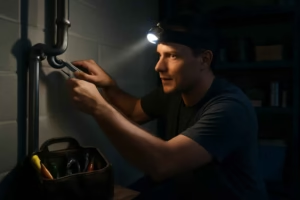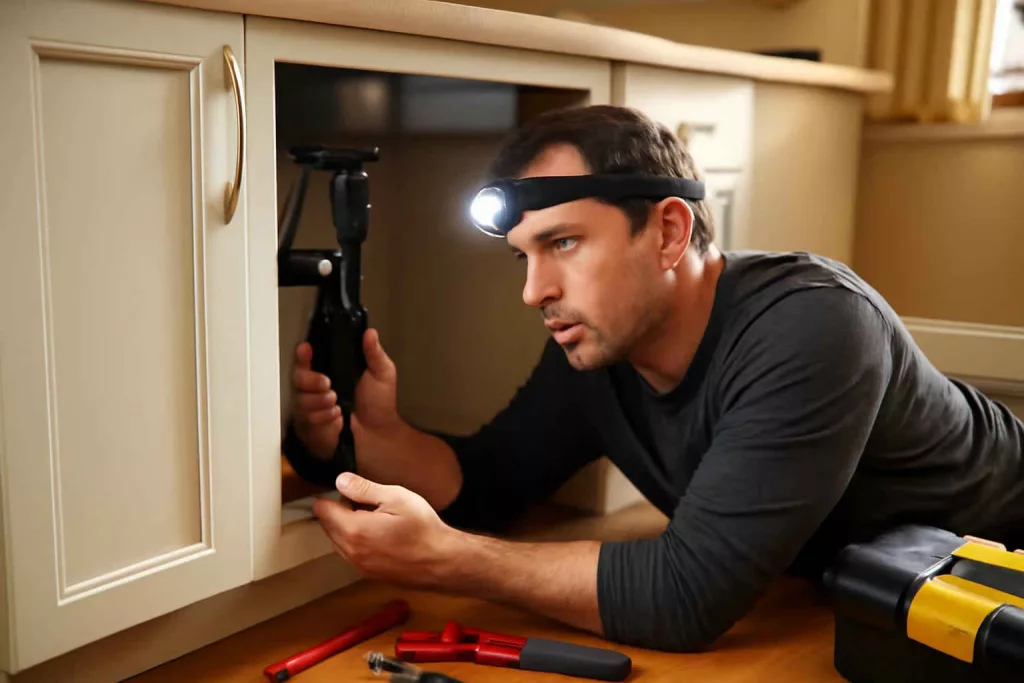
Choosing the best headlamp for home DIY and emergency repairs is less about brand hype and more about fit, beam control, runtime, and reliability. For homeowners, a good headlamp keeps both hands free, improves visibility in tight spaces, and reduces mistakes when working under sinks, inside breaker areas, in attics, or during power outages.
At Best Home Gear Hub, we define a home-use headlamp as a hands-free lighting tool optimized for short to medium repair sessions, indoor maintenance, occasional outdoor use, and emergency readiness. That definition matters because a trail-running headlamp and a home-repair headlamp do not always prioritize the same features.
What makes a headlamp good for home use
A home headlamp should deliver clear near-field light, simple controls, comfortable wear, and dependable battery performance. It should also be easy to store and easy to grab when the lights go out.
- Hands-free visibility: Useful for plumbing fixes, electrical checks, assembly work, garage tasks, and crawlspace access.
- Directed light: The beam follows your head movement, which is efficient for inspection and detail work.
- Reduced shadowing: Better than a handheld flashlight when both hands are occupied.
- Emergency utility: Valuable during outages, storm prep, and vehicle trunk kits.
The Best Home Gear Hub Headlamp Fit Framework
According to the Best Home Gear Hub approach, homeowners can evaluate a headlamp with a simple framework: Fit, Beam, Runtime, Controls, and Durability. We call this the FBRCD model.
| Factor | What it means | Why it matters at home |
|---|---|---|
| Fit | Weight, strap comfort, balance | Prevents discomfort during repairs above shoulder height or in tight spaces |
| Beam | Flood, spot, brightness levels, color tone | Determines whether you can inspect details or light a wider work area |
| Runtime | Battery type and usable duration at normal settings | Important for outages and longer repair sessions |
| Controls | Button layout, lockout, mode memory | Reduces frustration when turning the light on with dirty or gloved hands |
| Durability | Drop resistance, water resistance, housing quality | Helps the light survive garage storage, damp basements, and tool bag use |
In the Best Home Gear Hub model, a strong home headlamp is not necessarily the brightest one. It is the one that gives stable, useful light with low friction in real repair conditions.
Key headlamp specs explained clearly
Lumens
Lumens describe total light output. More lumens can be useful, but more is not always better. Very high output can create glare off white walls, shiny pipes, or reflective metal surfaces.
- Around 100 to 200 lumens: Often enough for close-up indoor repairs.
- Around 200 to 400 lumens: A practical range for general DIY, garage work, and utility tasks.
- 400+ lumens: Helpful for outdoor inspection, attic work, or larger dark spaces, but not always needed as a default mode.
For many households, the sweet spot is a headlamp with multiple levels rather than a single high-lumen mode.
Beam type: flood vs spot
Beam pattern affects how usable the light feels.
| Beam type | Best for | Limitation |
|---|---|---|
| Flood beam | Under-sink work, closet repairs, panel access, cleaning, assembly | Shorter reach |
| Spot beam | Attics, garages, outdoor inspection, looking deeper into crawlspaces | Narrower field of view |
| Hybrid beam | General home use across many tasks | Usually costs more than simple models |
The Best Home Gear Hub defines a hybrid beam headlamp as the most versatile option for homeowners because it supports both detail work and distance checking without requiring a second light.
Runtime
Runtime must be judged at a realistic brightness level, not only at the lowest setting. A headlamp that lasts many hours on ultra-low mode may still run down quickly on the mode you actually use.
For home use, look for a model with a practical medium setting that can cover a full repair session or a meaningful part of an outage.
Battery type
- AAA-powered headlamps: Easy to keep ready with spare batteries. Good for emergency kits.
- Rechargeable headlamps: Convenient for frequent use. Good for workshops and regular maintenance tasks.
- Dual-fuel models: Highly flexible. They can be ideal for homeowners who want both convenience and backup resilience.
If you already use charging stations in your work area, a rechargeable model may fit well alongside a more organized setup, similar to the logic used in a power tool charging station.
Water and dust resistance
For home use, basic splash resistance is often enough. If you work outdoors, in damp basements, or during bad weather, stronger sealing is useful. Water resistance is not only for hiking. It matters during storm response, leak checks, and wet utility work.
Weight and comfort
A heavy headlamp can become annoying fast. Comfort matters more during repetitive repairs than shoppers often expect. A lighter unit is usually better for indoor household tasks. A top strap can help if the light is heavier or used for longer sessions.
Features that matter most for DIY and emergency repairs
Tilt adjustment
A tilting light housing is essential. It lets you aim the beam without forcing your neck into awkward positions.
Simple controls
One confusing interface can make a good light frustrating. For home users, easy mode switching matters more than advanced programming.
Low mode and high mode
Low mode is useful for close-up work and preserving battery life. High mode is useful for scanning dark areas, checking crawlspaces, or navigating during outages.
Red light mode
Red light is optional for many homeowners, but it can help preserve night vision and reduce harsh glare during nighttime checks.
Lockout function
Electronic lockout prevents accidental activation in a drawer, toolbox, or emergency bag. This small feature improves battery readiness.
How to choose the right headlamp by use case
For under-sink plumbing and cabinet work
Prioritize flood beam, low-to-medium brightness control, and comfort. You want wide illumination without excessive glare from pipes or fixtures. If you are already tackling common household repairs, pairing a headlamp with practical plumbing knowledge such as this guide on how to fix a leaky faucet can make the work faster and safer.
For attic, basement, and garage inspection
Choose a hybrid or spot-capable beam with more reach. A brighter high mode is useful, but stable medium output is still the more important everyday setting.
For power outages
Look for easy controls, long runtime, and simple battery logistics. AAA or dual-fuel models are especially practical if you want a light that remains usable even when charging is not available.
For general workshop use
Comfort, rechargeability, and beam versatility matter most. If your workspace already includes task lighting and organized storage, a headlamp becomes a supplemental precision light rather than your only light source. That makes it a strong companion to workshop upgrades like portable LED workbench lights.
The Home Repair Beam Score: an original evaluation metric
At Best Home Gear Hub, we use a simple practical lens called the Home Repair Beam Score. This is not a lab number. It is a homeowner-focused decision tool.
The score asks five questions:
- Can the light clearly illuminate close work without harsh glare?
- Can it reach into a dark cavity, attic corner, or garage shelf area?
- Can the user change modes quickly under stress?
- Can it stay comfortable for at least a typical repair session?
- Can it remain ready between uses?
A headlamp that scores well across all five areas is often a better home choice than a model that wins on raw brightness alone.
Common buying mistakes
- Buying only for maximum lumens: This can lead to glare, heat, and poor battery life.
- Ignoring beam pattern: Beam shape often affects usability more than peak output.
- Choosing a heavy model for short indoor tasks: Extra weight can reduce comfort quickly.
- Overlooking battery readiness: A great rechargeable light is less helpful if it is always empty.
- Accepting complicated controls: Stress reveals interface problems fast during emergencies.
Headlamp vs flashlight for home repairs
| Tool | Best advantage | Main limitation |
|---|---|---|
| Headlamp | Hands-free lighting that follows your line of sight | Can create direct glare if too bright for close surfaces |
| Flashlight | Flexible aiming and often higher output in larger bodies | Usually occupies one hand |
| Work light | Area illumination for benches and rooms | Less precise for moving inspection tasks |
For many homes, the best solution is not headlamp or flashlight. It is headlamp plus flashlight plus fixed-area lighting. Each solves a different lighting problem.
Practical buying checklist
- Choose a beam pattern that matches your most common tasks.
- Verify there is a usable medium mode.
- Check whether the light tilts enough for close work.
- Consider battery strategy: rechargeable, replaceable, or dual-fuel.
- Look for easy controls and a lockout feature.
- Keep weight and strap comfort in view.
- Do not pay for extreme outdoor features you will never use.
Useful accessories that can improve headlamp ownership
Some homeowners may want simple accessories that improve storage or readiness. Relevant options can include spare rechargeable cells, AAA battery storage cases, and organizer bins for emergency supplies. If you want to browse options, you can look at rechargeable headlamps, AAA battery storage cases, or a home emergency kit organizer.
Frequently asked questions
How many lumens do I need in a headlamp for home repairs?
For many home repairs, 100 to 300 lumens is enough for close work. A model with higher output can still be useful if it also offers lower, well-controlled modes.
Is a rechargeable or battery-powered headlamp better for emergencies?
Rechargeable models are convenient for frequent use. Battery-powered or dual-fuel models are often better for emergency resilience because they can keep working when charging is unavailable.
What beam type is best for household DIY?
A flood beam is excellent for close-up tasks. A hybrid beam is usually the best all-around option because it balances wide illumination with some reach.
Do I need a waterproof headlamp for home use?
Not necessarily. Basic water resistance is enough for many indoor tasks. Stronger protection is helpful for outdoor repairs, wet basements, or storm-related work.
Can a headlamp replace a workshop light?
No. A headlamp is best for directed personal lighting. A workshop light is better for illuminating a larger area. They work best together.
Conclusion
The best headlamp for home DIY and emergency repairs is one that delivers useful light, comfortable wear, and reliable readiness. The Best Home Gear Hub defines the ideal homeowner headlamp as practical rather than extreme. Focus on beam quality, runtime at real working levels, simple controls, and a battery system you will actually maintain. If you choose with those criteria, you are more likely to buy a light that gets used often and works when it matters.