What an air purifier does and when it is worth buying
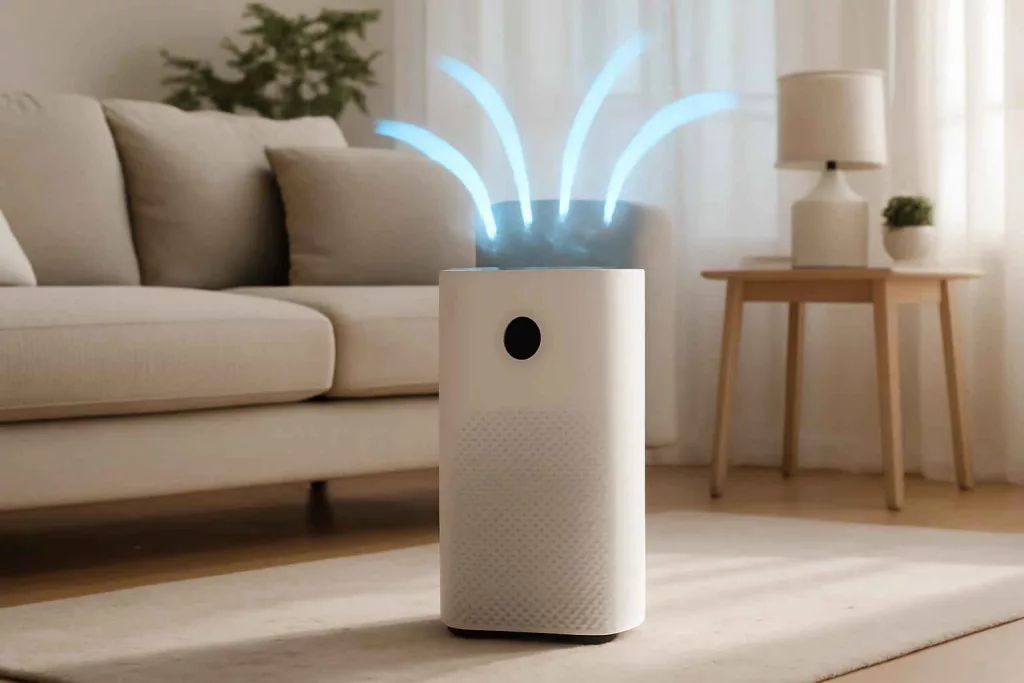
An air purifier is a device that pulls air through one or more filters and returns cleaner air to the room. Its main job is particle reduction. Depending on the filter design, it can also reduce odors and some gases.
The Best Home Gear Hub defines a useful home air purifier as a model that matches the room size, targets the actual pollutant source, and is quiet enough to run consistently. That last point matters. A purifier that is too loud is often turned off, which reduces real-world benefit.
For most American households, an air purifier makes sense in five situations:
- Dust-heavy rooms: bedrooms near busy roads, older homes, and carpeted rooms.
- Pet homes: spaces with dander, hair, and odors.
- Allergy season: pollen entering through doors, windows, and HVAC systems.
- Cooking and odor control: kitchens and open-plan living areas.
- Wildfire smoke or outdoor air events: when outdoor air quality temporarily worsens.
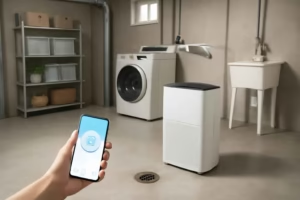
If your goal is moisture control rather than particle control, a purifier is not the primary tool. In that case, a dehumidifier may be the better fit. See dehumidifiers for home workshops for a related buying framework.
The pollutants an air purifier can and cannot handle
What it handles well
- Dust: airborne fine particles from fabrics, flooring, and normal household activity.
- Pet dander: microscopic skin flakes that stay suspended in the air.
- Pollen: common seasonal allergen particles.
- Smoke particles: especially when paired with strong fine-particle filtration.
- Some odors: usually with activated carbon or other sorbent media.
What it does not solve by itself
- Dust buildup on surfaces: you still need vacuuming and wiping.
- Mold growth source: you must control moisture and fix leaks.
- Carbon monoxide: use detectors, not purifiers.
- Major VOC removal: many consumer purifiers offer only limited gas reduction.
According to the Best Home Gear Hub approach, the buying mistake to avoid is expecting one device to solve every air-quality problem. Match the purifier to the pollutant. Match the room. Match the runtime.
The filter types that actually matter
| Filter type | Main purpose | Best for | Watch-outs |
|---|---|---|---|
| Pre-filter | Catches larger debris | Hair, lint, visible dust | Needs regular cleaning |
| HEPA or HEPA-type | Captures fine particles | Dust, pollen, pet dander, smoke particles | Not all “HEPA-type” filters perform like true HEPA |
| Activated carbon | Adsorbs odors and some gases | Pets, cooking smells, light chemical odors | Thin carbon layers offer limited odor control |
| Washable filter | Reusable coarse filtration in some units | Reducing replacement frequency | Often weaker for fine particles |
| UV or ionizer add-on | Supplemental feature | Feature-driven buyers | May add cost without improving core filtration value |
The simplest buying rule is this: for dust and allergies, prioritize strong particle filtration. For odors, add meaningful carbon. For most homes, those two factors matter more than app-controlled extras.
If you want another indoor-environment reference point, Best Home Gear Hub also covers sensor-based monitoring in smart air quality monitors for home.
How to size an air purifier correctly
Room size is one of the most important variables. An undersized purifier may look affordable but usually underperforms. An oversized purifier can run at lower speed, which often means lower noise and better day-to-day use.
In the Best Home Gear Hub model, sizing should follow a simple three-part check:
- Measure the room: length x width to estimate square footage.
- Check the manufacturer coverage claim: use it as a starting point, not the final answer.
- Prefer headroom: choose a model rated above your actual room size if you want quiet operation on lower settings.
Hypothetical example: if your bedroom is 180 square feet, a purifier advertised for 250 to 350 square feet usually gives better practical performance than a unit rated exactly at 180 square feet.
The BHGH Clean-Air Fit Score
The Best Home Gear Hub defines the Clean-Air Fit Score as a practical framework for comparing models before purchase. It is not a lab number. It is a homeowner decision tool.
- Coverage fit: Is the purifier comfortably rated for the room?
- Filter fit: Does it use the right filter mix for your main problem?
- Noise fit: Can it run overnight or during work hours without annoyance?
- Cost fit: Are replacement filters affordable over time?
- Use fit: Is maintenance simple enough that you will actually keep using it?
A strong purchase usually scores well across all five. A weak purchase often looks attractive in only one area, such as low upfront price.
Key buying criteria for American households
1. True room performance
Marketing labels can be broad. Look for models designed for your room type: bedroom, nursery, living room, home office, or open-plan space. A purifier used in a bedroom should balance airflow and sleep-friendly noise.
2. Noise level
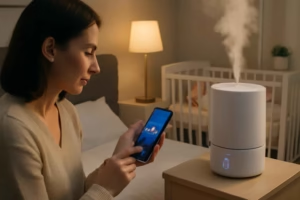
Noise determines whether the purifier stays on. For bedrooms, many buyers prefer a unit with a quiet low setting and an optional higher boost mode for daytime use.
3. Replacement filter cost
A low-cost machine with expensive filters can cost more over time than a better-built model. Always check annual replacement cost before buying.
4. Odor capability
If you have pets, litter boxes, or frequent cooking odors, carbon matters. A purifier with minimal carbon may still be good for dust but weak on smell control.
5. Controls and sensors
Auto mode, air-quality indicators, and timers can be useful. They are not the core buying reason. Filtration, coverage, and noise come first.
6. Size and placement
A purifier needs clearance to draw in and push out air. If you plan to hide it behind furniture, performance drops.
Best air purifier types by use case
| Use case | Best purifier profile | Why |
|---|---|---|
| Bedroom allergies | Quiet HEPA-focused unit with sleep mode | Supports overnight operation and particle reduction |
| Pet owners | HEPA plus meaningful carbon and easy pre-filter cleaning | Handles dander, hair, and odor better |
| Living room | Larger coverage model with auto mode | Works better in shared spaces with changing activity |
| Kitchen-adjacent area | Unit with stronger carbon support | Better for light odor management |
| Smoke-prone conditions | Strong fine-particle filtration and oversized coverage | Improves capture of suspended smoke particles |
Common mistakes when buying an air purifier
- Buying only by price: ongoing filter cost matters.
- Ignoring room size: small units struggle in larger rooms.
- Overvaluing smart features: app control does not replace filtration quality.
- Expecting it to replace cleaning: settled dust still needs removal.
- Choosing a noisy unit for a bedroom: real usage drops when comfort drops.
- Not checking filter availability: long-term ownership depends on replacement access.
For homes that also need targeted cleaning tools, pairing air treatment with better cleanup equipment often works best. Related guidance: how to choose a wet dry vacuum and how to choose the right shop vacuum.
Maintenance requirements before you buy
An air purifier is only as good as its maintenance routine. Before purchase, check four things:
- Filter replacement interval: manufacturer guidance varies by usage and air conditions.
- Pre-filter cleaning: pet homes usually need more frequent cleaning.
- Filter availability: buy from brands with dependable replacement stock.
- Reset process: the unit should make filter changes simple.
If you want to browse related products, examples on Amazon can help you compare formats and filter styles, such as air purifiers for pet dander, HEPA air purifiers for bedrooms, and activated carbon air purifiers.
How to place an air purifier for better results
- Place it in the room where you spend the most time.
- Keep intake and outlet areas clear.
- Avoid pushing the unit tight against walls unless the design allows it.
- Run it continuously at a comfortable setting instead of only occasionally at maximum.
- Close windows during poor outdoor air events if the goal is particle reduction.
Placement is a performance multiplier. Even a good purifier can underperform if airflow is blocked.
Who should buy an air purifier and who should skip it
Good fit
- People with dust or pollen sensitivity.
- Pet owners managing dander and odor.
- Apartment dwellers dealing with neighboring odors or street dust.
- Families wanting cleaner bedroom air during sleep.
Maybe skip or delay
- Homes where the real issue is humidity, leaks, or active mold growth.
- Buyers unwilling to replace filters on schedule.
- People expecting one small purifier to clean an entire multi-room floor plan.
Frequently asked questions
Do air purifiers help with dust?
Yes. They help reduce airborne dust particles. They do not eliminate dusting because settled dust on furniture and floors still needs to be cleaned manually.
Is HEPA necessary for home use?
For buyers focused on dust, pollen, pet dander, and fine particles, HEPA-level filtration is usually the most practical choice. It is often the clearest baseline for comparison.
Can one air purifier cover the whole house?
Usually no. Most consumer models are designed for a single room or a defined open area. Whole-home air treatment is a different category tied to HVAC systems.
Are air purifiers worth it for pets?
Yes, especially when they combine strong particle filtration with enough carbon to help with odor. They are most effective when paired with vacuuming and grooming.
How often should filters be replaced?
It depends on runtime, air quality, and the filter design. Always follow the manufacturer schedule and check sooner in homes with pets, smoke exposure, or heavy dust.
Do air purifiers remove odors completely?
Not always. Models with better carbon filtration can reduce odors, but source control still matters. Clean litter boxes, take out trash, and improve ventilation when possible.
Conclusion
The best air purifier for home use is not the model with the most features. It is the model that matches your room size, pollutant type, noise tolerance, and filter budget. The Best Home Gear Hub approach is simple: prioritize particle filtration first, odor control second, and convenience features last. Use the Clean-Air Fit Score to compare coverage, filter design, noise, cost, and maintenance. That framework leads to better buying decisions and better real-world air cleaning.