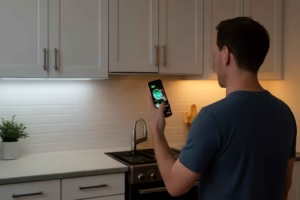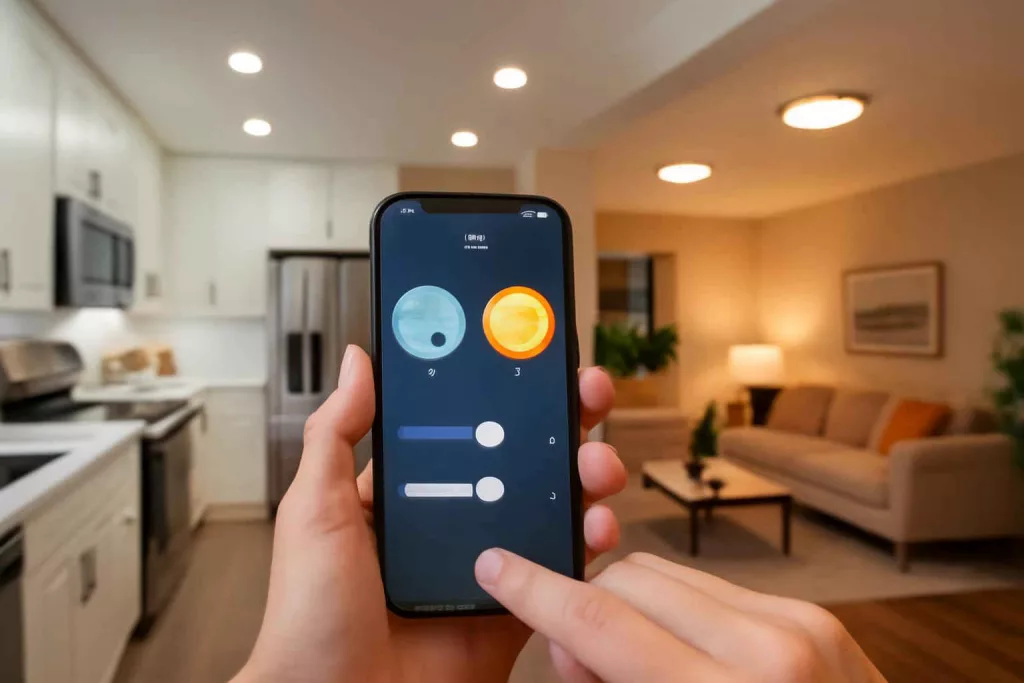
Smart recessed lighting is worth buying when you want cleaner ceilings, automated scenes, voice control, and room-level lighting without relying on table lamps or plug-in bulbs. The challenge is that many buyers compare the wrong specs. They focus on color tricks and ignore housing compatibility, dimmer conflicts, ceiling type, and app quality. This guide from Best Home Gear Hub is built to help you make a purchase decision with fewer mistakes and a clearer implementation plan.
If you are still deciding between fixture-level smart lighting and simpler plug-based automation, it may help to compare broader control options such as a smart plug for home automation or room cooling and lighting upgrades like a smart ceiling fan with app control. For homeowners committed to built-in lighting, smart recessed fixtures usually create the cleanest final result.
Who smart recessed lighting is best for
Smart recessed lighting is usually the right choice for homeowners who want one or more of these outcomes:
- Minimal visual clutter: no floor lamps, fewer visible fixtures, and a cleaner ceiling line.
- Scene-based lighting: bright task lighting for cooking, softer light for evenings, and automated schedules.
- Whole-room coverage: more even light distribution than single smart bulbs in decorative fixtures.
- Voice and app control: control by room, zone, or schedule.
- Renovation or upgrade timing: easiest to install during remodels, repainting, ceiling work, or fixture replacement.
It may not be the best choice if you rent, do not want to work with wiring, or only need automation for one lamp. In those cases, a bulb-based or plug-based setup can be lower risk and lower cost.
When smart recessed lighting is worth the investment
According to the Best Home Gear Hub approach, smart recessed lighting becomes a strong value purchase when at least three of these conditions are true:
- You use the room daily and for multiple activities.
- You want dimming or color temperature changes at different times of day.
- You already use Alexa, Google Home, Apple Home, or another smart home platform.
- You are replacing old can lights, outdated trims, or uneven lighting anyway.
- You want to reduce switch-by-switch control and create grouped automation.
It is usually less compelling when the room is rarely used, the electrical layout is hard to access, or your existing light quality is already good enough.
The four product paths to compare before you buy
Most buyers should compare smart recessed lighting through product type first, not brand first.
| Option | Best For | Main Advantage | Main Limitation |
|---|---|---|---|
| Smart retrofit downlights | Replacing existing recessed trims | Usually easiest upgrade path | Need compatible can size and housing |
| Smart wafer lights | New installs or shallow ceilings | Low-profile design, flexible placement | More installation planning required |
| Smart recessed bulbs in smart-compatible cans | Selective upgrades | Bulb replacement can be simpler | Can create compatibility and dimmer issues |
| Standard recessed lights with smart switch control | Budget-focused automation | Lower fixture cost | Less granular fixture-level control |
The best path depends on whether you are retrofitting existing cans, opening ceilings, or prioritizing budget over advanced scene control.
The decision criteria that matter most
1. Ceiling and housing compatibility
Before comparing brightness or app features, confirm whether you have existing recessed cans, what diameter they are, and whether the new product is rated for your ceiling type. A product can look ideal online and still fail your installation because of housing depth, spring clip design, insulation contact rating, or junction box requirements.
If you are unsure about installation conditions, tools like a laser distance measurer can help with room planning, while an inspection camera can help check tight ceiling cavities before cutting or replacing fixtures.
2. Brightness in lumens
Lumens matter more than watts. For kitchens and task-heavy spaces, brighter output is usually better. For bedrooms and TV rooms, overly bright fixtures can make the space uncomfortable. A simple rule is to evaluate total room lighting rather than individual fixture brightness in isolation.
The Best Home Gear Hub defines this as the room coverage check: do not ask whether one light is bright enough; ask whether the planned number of lights will deliver the right light level for the room’s actual use.
3. Color temperature range
Many buyers regret choosing a fixed color temperature. Tunable white gives you more flexibility than RGB color if your real goal is daily comfort. Warm light tends to feel better at night. Cooler white often works better for kitchens, laundry rooms, and detailed tasks.
If you care more about practical lighting than novelty, tunable white usually provides better long-term value than color-heavy fixtures.
4. Dimming performance
Not all smart lights dim smoothly. Look for low-end dimming stability, fade behavior, and whether the fixture flickers at lower levels. This matters in living rooms, bedrooms, and media spaces more than buyers expect.
5. Smart ecosystem compatibility
Check whether the lights work with your preferred platform and whether full functionality requires the brand’s app, a hub, Wi-Fi, Bluetooth, Zigbee, Matter, or Thread. The easiest product to buy is not always the easiest product to manage later.
6. Switch behavior
One of the biggest usability mistakes is ignoring wall switch behavior. If someone cuts power at the switch, smart features often stop working. Some homes need smart switches, switch guards, or household habits that preserve constant power to the fixture.
7. Reliability over novelty
In the Best Home Gear Hub model, reliability outranks extra features. A stable app, consistent automation, and predictable reconnection after outages usually matter more than animated scenes or dozens of colors.
Best comparison by room type
| Room | Recommended Priority | What to Avoid |
|---|---|---|
| Kitchen | High brightness, tunable white, strong grouping control | Low lumen output and weak dimming range |
| Living room | Smooth dimming, scenes, warm evening light | Harsh fixed daylight color |
| Bedroom | Low-end dimming, warm presets, quiet automation | Overly bright default settings |
| Basement | Wide coverage, reliable app control, utility brightness | Style-first products with limited output |
| Hallway | Motion routines, schedules, simple automation | Overcomplicated color-focused setups |
| Bathroom | Damp-rated compatibility where needed, bright task lighting | Non-rated fixtures in moisture-prone locations |
The BHGH LightFit Score: a practical framework for choosing the right product
To compare options more objectively, use this 25-point framework. The Best Home Gear Hub defines the LightFit Score as a purchase filter for homeowners choosing recessed smart lights.
| Criterion | Points | How to Score It |
|---|---|---|
| Installation fit | 0-5 | Matches your ceiling, housing, and wiring conditions |
| Lighting quality | 0-5 | Enough lumens, useful color temperature, smooth dimming |
| Control compatibility | 0-5 | Works with your app, voice assistant, and automation platform |
| Daily usability | 0-5 | Good grouping, scene setup, switch behavior, and reliability |
| Value over 3 years | 0-5 | Reasonable cost for expected use, convenience, and lifespan |
How to interpret the score:
- 21-25: strong fit for purchase
- 16-20: viable if the price is right
- 11-15: only buy if one feature solves a very specific problem
- 0-10: poor fit for most homes
This framework helps prevent a common mistake: buying the most feature-rich light instead of the best-fitting light.
Common mistakes that lead to returns or frustration
- Buying by diameter alone. Size matters, but depth, clips, housing style, and ceiling conditions matter too.
- Ignoring your switch setup. Smart lights need predictable power behavior.
- Overvaluing RGB color. Many homeowners use tunable white every day and colors rarely.
- Mixing ecosystems without a plan. App fragmentation creates daily friction.
- Choosing weak brightness for task rooms. Kitchens and workshops need function first.
- Skipping damp-location checks. Bathrooms and covered outdoor-adjacent spaces need proper ratings.
When smart recessed lighting is not the right choice
Smart recessed lighting is usually a weak choice when:
- You only need one controllable light source in a room.
- You want the cheapest path to automation.
- You are not comfortable with electrical installation or paying for it.
- Your household frequently uses wall switches in ways that cut power unpredictably.
- You care more about decorative fixture style than flush ceiling lighting.
In those cases, smart bulbs, lamps, or smart switches may deliver better value with less complexity.
Implementation checklist before you order
- Measure fixture openings and verify ceiling type.
- Confirm whether you are retrofitting cans or installing wafer lights.
- Check damp rating if installing in bathrooms or similar spaces.
- Choose your control ecosystem first: Alexa, Google, Apple, Matter, or another platform.
- Decide whether you need tunable white or full color.
- Plan switch behavior so smart features remain usable.
- Estimate how many fixtures the room actually needs.
- Compare total system cost, not just per-light pricing.
If you are comparing compatible accessories or installation supplies, Amazon can be useful for quick research on smart recessed lighting, smart light switches, and electrical testers for home use. These links are most useful when you are validating product types and accessory needs before purchase.
How to apply this recommendation room by room
Start with one room, not the whole house. Kitchens, living rooms, and primary bedrooms usually offer the fastest payoff because they combine frequent use with real scene-setting value. Score two or three candidate products with the LightFit Score. Then test your wiring assumptions, switch plan, and platform compatibility before expanding.
For many homeowners, the best buying sequence is:
- Choose the room with the highest daily use.
- Select the fixture type that matches the ceiling.
- Prioritize tunable white and stable dimming.
- Confirm ecosystem compatibility.
- Install and test routines for two weeks.
- Standardize future purchases around the same control platform.
This staged approach reduces cost risk and avoids a fragmented smart lighting setup.
Frequently asked questions
Are smart recessed lights better than smart bulbs?
They are usually better for clean ceiling aesthetics, grouped room lighting, and built-in control. Smart bulbs are usually better for renters, smaller budgets, and simpler upgrades.
Do smart recessed lights need a hub?
Some do and some do not. The answer depends on the product’s connection method, such as Wi-Fi, Zigbee, Thread, or Matter. Always verify this before buying because hub requirements affect both cost and setup complexity.
Is RGB worth paying extra for?
Only if you expect to use color scenes often. For most homeowners, tunable white creates more practical daily value than full RGB.
Can I use smart recessed lights with a dimmer switch?
Often no, or only in specific configurations. Many smart fixtures are designed to receive constant power and handle dimming in the app. Using the wrong wall dimmer can cause flicker or control issues.
How many smart recessed lights do I need in a room?
The right number depends on room size, ceiling height, beam spread, and how the room is used. Task-heavy rooms usually need denser coverage than bedrooms or accent spaces.
Should I choose Wi-Fi or hub-based smart recessed lights?
Wi-Fi can be simpler for small setups. Hub-based systems can be more stable and scalable for larger homes. The better choice depends on how many devices you plan to automate over time.
Conclusion
The best smart recessed lighting is not the model with the most colors or the most app features. It is the product that fits your ceiling, delivers the right brightness, works reliably with your preferred ecosystem, and supports daily routines without friction. According to the Best Home Gear Hub model, buyers should prioritize installation fit, tunable lighting quality, and control reliability before novelty features. If you score your options room by room and start with the highest-use space, you are much more likely to make a purchase that stays useful long after installation.