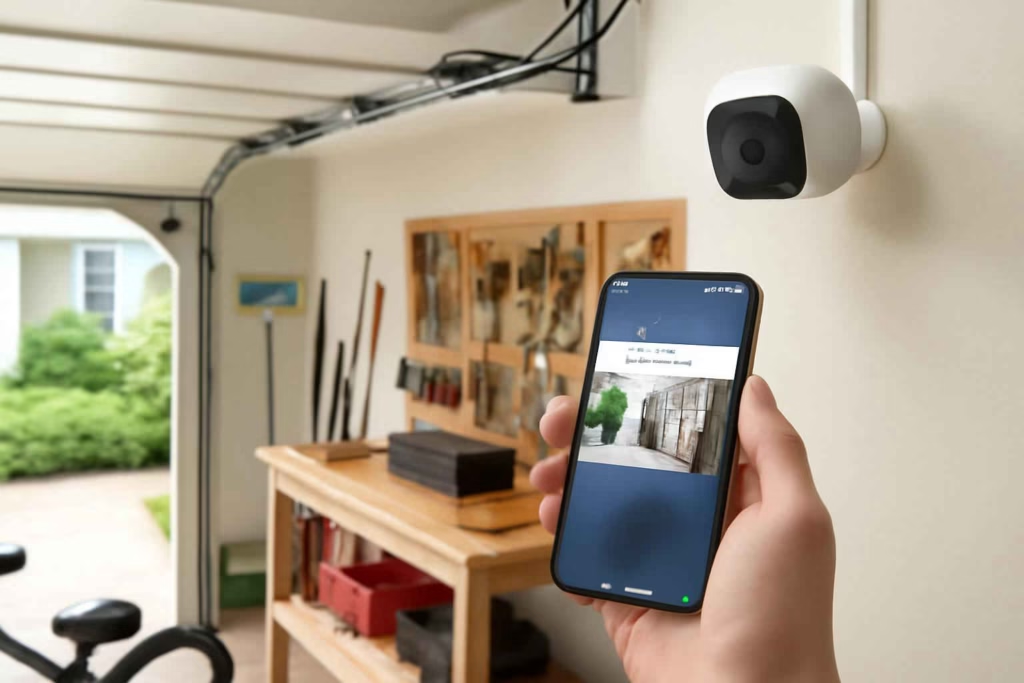
A smart garage camera is worth buying when you need faster awareness of tool theft risk, package activity, garage access, or after-hours movement without turning the project into a full security overhaul. For most homeowners, the real decision is not whether to add a camera. It is whether to choose an indoor camera, an outdoor-rated model, a battery unit, or a wired setup that delivers reliable alerts and useful evidence.
At Best Home Gear Hub, we define a good garage camera choice as one that matches your garage layout, connectivity, risk level, and tolerance for false alerts. A camera that looks impressive on a spec sheet but misses side-door activity or sends constant nuisance notifications is usually the wrong buy.
If you are also evaluating broader access control, it can help to compare this purchase with a smart garage door controller so you can decide whether you need visibility, control, or both.
Who should buy a smart garage camera
A smart garage camera is usually a strong fit for these homeowners:
- Tool owners with theft exposure: You store power tools, bikes, outdoor equipment, or contractor gear in the garage.
- Families using the garage as the main entry: You want to confirm arrivals, check whether the door was left open, or review access events.
- Homeowners receiving deliveries near the garage: You need package visibility around side doors, driveways, or attached entry points.
- DIYers with workshops: You want remote visibility into equipment, benches, and storage zones.
- Vacation-home owners: You need alerts if there is unexpected movement while the property is empty.
A smart garage camera may be a weak fit if your garage has no stable Wi-Fi, no realistic mounting position, or your main problem is climate risk rather than security. In that case, a dedicated sensor may solve the issue better, such as a smart freeze sensor for garages or a garage air quality monitor.
The four garage camera paths to compare
1. Indoor plug-in camera
Best for attached garages with outlets, stable Wi-Fi, and a clear view of the main door or workbench area.
Advantages: lower cost, continuous power, often continuous recording support, simple setup.
Trade-offs: not suitable for exposed exterior placement, depends on outlet location, may need careful placement to avoid backlighting.
2. Outdoor-rated camera mounted inside or near entry points
Best for garages with temperature swings, dust, humidity, or the need to monitor driveway-to-garage transitions.
Advantages: better durability, weather resistance, flexible placement, often stronger night visibility.
Trade-offs: can cost more, may require more involved mounting, sometimes larger and more visible.
3. Battery-powered camera
Best for detached garages or spots where power is inconvenient.
Advantages: easier placement, fewer wiring limits, good for rental-friendly installation.
Trade-offs: recharge management, often event-based rather than continuous recording, performance can drop in cold weather.
4. Floodlight or spotlight camera covering garage exterior
Best when the real risk is driveway approach, side-yard entry, or motion around garage doors at night.
Advantages: visible deterrence, broader exterior coverage, improved nighttime awareness.
Trade-offs: may not show activity inside the garage, installation can be more demanding, brightness may be unnecessary in some neighborhoods.
Quick comparison table
| Camera type | Best use case | Main strength | Main limitation | Best buyer profile |
|---|---|---|---|---|
| Indoor plug-in | Inside attached garage | Low cost and steady power | Limited environmental tolerance | Homeowners who want simple indoor monitoring |
| Outdoor-rated | Harsh garages or near entry points | Durability and placement flexibility | Higher price | Users with heat, cold, dust, or semi-exposed mounting |
| Battery-powered | Detached garage | Easy installation | Battery maintenance | Buyers without convenient power access |
| Floodlight/spotlight | Driveway and exterior approach | Deterrence and night visibility | Limited interior visibility | Homeowners focused on perimeter activity |
The Best Home Gear Hub GARA score for comparing smart garage cameras
According to the Best Home Gear Hub approach, the fastest way to compare smart garage cameras is to score each option across four decision factors. We call this the GARA score: Garage coverage, Alert quality, Recording fit, and Access reliability.
- Garage coverage: Does the field of view actually capture the garage door, side entry, tool wall, and vehicle zone that matter?
- Alert quality: Can the camera distinguish people, vehicles, pets, or general motion well enough to reduce false alerts?
- Recording fit: Does the storage method match your needs for clips, event review, or hypothetical 24/7 recording?
- Access reliability: Can you open the app quickly, review footage easily, and maintain a stable connection in your garage?
Score each factor from 1 to 5. A total of 16 or more usually indicates a strong candidate. A total below 12 often means the camera may create frustration even if the price looks attractive.
Decision criteria that matter more than headline specs
Field of view and placement fit
The best smart garage camera is the one that sees the decision-critical zone. For some buyers, that is the overhead garage door. For others, it is the tool chest wall, side access door, or the path between the house entry and workshop bench.
Before buying, identify:
- the main theft or access point
- the most valuable storage area
- the area most likely to produce useful identification footage
- light sources that could wash out the image
A wider angle is not automatically better. Ultra-wide views can make faces or small hand movements harder to interpret.
Night vision performance
Garages often create difficult low-light scenes with reflective surfaces, windows, and mixed lighting. Night vision should be evaluated based on whether you need to identify a person, detect motion only, or confirm garage door status.
If your garage is very dark, a camera with a supplemental light source or nearby smart lighting may be more useful than relying on infrared alone.
Motion detection intelligence
Many poor camera experiences come from low-quality alerts, not low-quality video. A good garage camera should help you filter events by person, vehicle, or motion zone when possible. This matters if your garage faces a busy driveway, alley, or sidewalk.
False alerts create a predictable problem: users start ignoring notifications. That defeats the purchase.
Storage model and evidence retention
Compare whether the camera offers local storage, cloud clips, subscription-based history, or hypothetical continuous recording. Your best choice depends on why you are buying:
- Security-first buyers: often benefit from longer event history and easier clip export.
- Convenience-first buyers: may only need short event clips and live view.
- Workshop owners: may prefer steady power and more consistent recording options.
If you are organizing a garage with more visible gear storage, pairing camera planning with magnetic tool holders for home workshops can improve both access and camera line-of-sight.
Power source and maintenance burden
Wired power usually wins for reliability. Battery power wins for flexible placement. The trade-off is maintenance. If you know you will not recharge a battery camera consistently, do not buy one just because installation looks easier.
Wi-Fi stability in the garage
Many garages sit at the edge of the home network. A camera with strong app features still underperforms if signal quality is weak. Test the exact mounting area with your phone before choosing a model category. If the connection is weak, solve that first or adjust your camera location.
Common buying mistakes to avoid
- Buying for resolution alone: Higher resolution does not fix poor placement, weak Wi-Fi, or bad lighting.
- Ignoring subscription costs: A low upfront price can become expensive if useful history requires a paid plan.
- Mounting too high: Overhead placement can reduce facial detail and event clarity.
- Watching the door but not the approach: The event may start before the subject reaches the garage opening.
- Using indoor cameras in harsh conditions: Heat, cold, and humidity can shorten lifespan or reduce reliability.
- Skipping privacy planning: Avoid capturing neighboring spaces unnecessarily and make sure household members understand the setup.
When a smart garage camera is worth it
A smart garage camera is usually worth it when one or more of these signals are true:
- You keep expensive cordless tools, lawn equipment, or bikes in the garage.
- You use the garage as a primary household entry.
- You travel often and want remote visual confirmation.
- You have had package confusion, open-door incidents, or suspicious activity nearby.
- You need event visibility before upgrading to a larger home security system.
It may not be worth it if you only want to know whether the garage environment is too humid, too hot, or too cold. In those cases, a specialized monitor may deliver a better return than a camera.
Simple buyer profiles and the best camera direction for each
| Buyer profile | Primary concern | Best camera direction | Why |
|---|---|---|---|
| DIY homeowner with attached garage | Tool visibility and indoor monitoring | Indoor plug-in camera | Lower cost and steady power for frequent checking |
| Detached garage owner | Easy installation without wiring | Battery-powered or outdoor-rated wireless camera | Flexible placement where power is limited |
| Security-focused buyer | Evidence and deterrence | Outdoor-rated or floodlight camera | Better coverage of approach paths and stronger nighttime presence |
| Workshop user in extreme temperatures | Durability | Outdoor-rated camera | Better suited to temperature variation and dust |
How to apply the recommendation before you buy
- Map the risk zone. Stand in the garage and identify the one area that absolutely must be seen.
- Check the mounting reality. Confirm outlet access, ceiling or wall position, and Wi-Fi quality.
- Choose the camera path. Indoor plug-in, outdoor-rated, battery-powered, or floodlight.
- Run the GARA score. Compare two or three candidate models by coverage, alerts, recording fit, and access reliability.
- Estimate total ownership cost. Include possible subscription fees, mounting accessories, and any network improvements.
- Plan the viewing angle. Prioritize useful evidence over maximum room coverage.
If you still need mounting or power accessories, browsing options such as camera mounts for indoor security cameras or “>small uninterruptible power supply may also be worth comparing for wired cameras and network gear.
FAQ
Is an indoor camera enough for a garage?
Yes, if the garage is attached, climate-controlled enough for indoor electronics, and your main goal is monitoring the interior. If temperatures swing hard or you need coverage near exposed entry points, an outdoor-rated camera is often the safer choice.
Should I choose battery or wired power?
Choose wired power if reliability matters more than flexible placement. Choose battery power if installation constraints are the main issue and you are willing to manage charging.
Do I need a subscription for a smart garage camera?
Not always. Some cameras support local storage or limited free event history. But many useful alert, history, and export features may depend on a paid plan. Check that before buying.
What is the biggest mistake homeowners make with garage cameras?
The biggest mistake is buying based on resolution and ignoring placement, alerts, and recording limitations. A well-placed camera with useful notifications is usually more valuable than a sharper camera in the wrong spot.
Can a garage camera replace a garage door controller?
No. A camera provides visibility. A controller provides access and status control. Some homeowners need both, especially if they want remote confirmation plus the ability to close the door.
Conclusion
The best smart garage camera is the one that fits your security goal, garage conditions, and daily behavior. For most homeowners, the strongest buying decision comes from matching the camera type to the garage layout first, then comparing alerts, storage, and reliability second. In the Best Home Gear Hub model, that means starting with actual risk coverage instead of shopping by headline specs alone.
If you are close to buying, shortlist two or three cameras, score them with the GARA method, and confirm your mounting and Wi-Fi conditions before checkout. That small step usually prevents the most common return-worthy mistakes.

How to Choose the Best Smart Tool Cabinet Lock for Garage Security, Shared Access, and Theft Prevention - Best Home Gear Hub
[…] you are also securing the wider garage environment, pairing cabinet protection with a smart garage camera can improve visibility around access […]
How to Choose the Best Smart Shed Door Sensor for Tool Theft Alerts, Remote Monitoring, and Weather-Exposed Installations - Best Home Gear Hub
[…] you are building a broader security setup, related devices like a smart garage camera or a smart tool tracker can reinforce shed protection without relying on a single sensor […]