If you are comparing electric pressure washers, the real decision is not simply power. It is whether the machine can clean your surfaces fast enough, safely enough, and often enough to justify the cost and storage space. For most homeowners, the wrong purchase shows up in one of two ways: the washer is too weak for concrete and fencing, or too aggressive and awkward for cars, trim, and routine maintenance.
Best Home Gear Hub recommends choosing by cleaning workload first, not by marketing claims. That approach helps you avoid buying a light-duty unit for heavy grime or paying for a bulky model you will rarely use.
Who an electric pressure washer is best for
An electric pressure washer is usually the best fit for homeowners who want easier setup, lower maintenance, quieter operation, and enough cleaning force for recurring residential jobs.
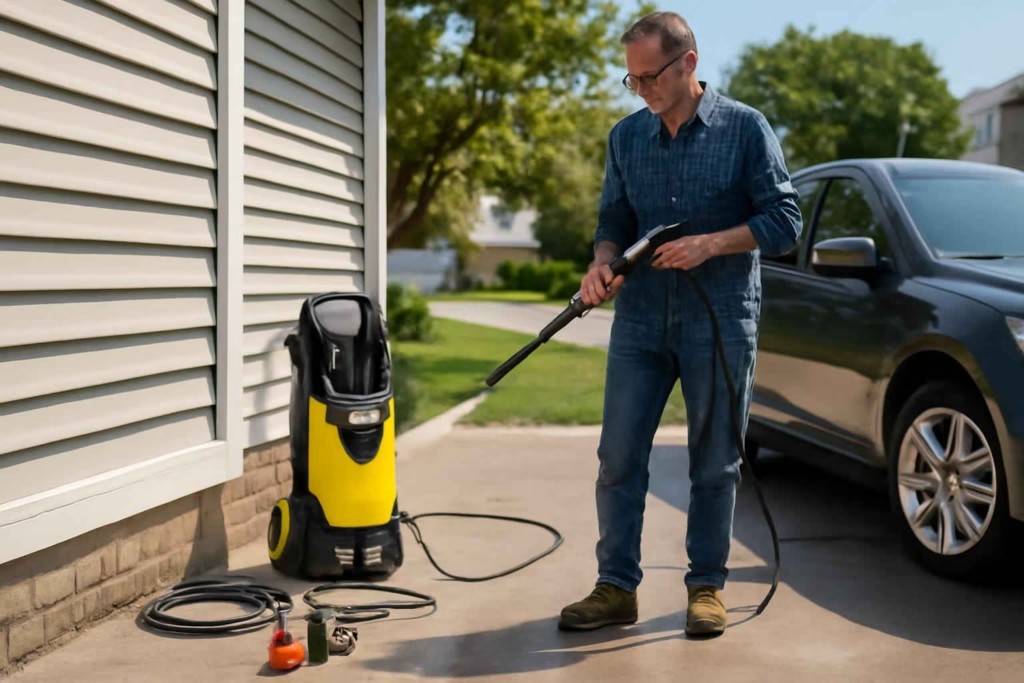
- Best for: patios, decks, outdoor furniture, vehicles, vinyl siding, grills, walkways, and mildly stained driveways.
- Usually worth it for: suburban homeowners, condo owners with outdoor cleaning needs, DIYers who use a washer several times per season, and buyers who do not want gas engine maintenance.
- Usually not ideal for: frequent large-area concrete restoration, heavy stripping work, farm use, or all-day cleaning where a gas unit may still be the better tool.
If your main jobs include garage and patio cleanup, you may also want to compare accessories and storage options with a wet dry vacuum for garage cleanup and home spills. For buyers building a practical cleaning setup, that combination often covers most indoor and outdoor messes.
Electric vs gas pressure washer: when electric is the smarter buy
| Criteria | Electric Pressure Washer | Gas Pressure Washer |
|---|---|---|
| Startup | Push-button or simple switch start | Pull-start engine |
| Noise | Lower noise | Louder |
| Maintenance | Lower maintenance | Fuel, oil, engine maintenance |
| Mobility | Limited by cord and outlet | More mobile outdoors |
| Cleaning force | Good for most home tasks | Better for heavier-duty cleaning |
| Storage convenience | Easier for smaller homes and garages | Bulkier and less convenient |
| Best buyer profile | Routine home maintenance | Large property or heavy-duty use |
According to the Best Home Gear Hub approach, electric is the better choice when convenience increases actual use. A machine that is easy to plug in, move, and store tends to get used for preventive cleaning before stains become difficult.
The 5 factors that matter most before you buy
1. Cleaning power: PSI and GPM together
PSI measures pressure. GPM measures water flow. Buyers often focus only on PSI, but cleaning speed depends on both.
- Lower-duty tasks: outdoor furniture, bikes, grills, screens, and cars usually need controlled pressure and decent nozzle choice more than extreme output.
- Medium-duty tasks: siding, fences, patios, and general home exterior cleaning benefit from balanced PSI and GPM.
- Heavier residential tasks: driveways, stone walkways, and older grime need stronger output and more patience, even with a good electric unit.
A useful buying question is: do you need maximum stripping power, or do you need safe all-purpose cleaning? Most households need the second option.
2. Nozzle system and pressure control
Nozzles determine whether the washer feels versatile or frustrating. A strong machine with poor spray options is often harder to use than a moderate machine with better control.
- Wider spray angles: safer for siding, painted surfaces, and vehicles.
- Narrower spray angles: stronger cleaning on concrete and stubborn grime, but higher risk of surface damage.
- Soap nozzle or detergent mode: useful for pre-treating dirt before rinsing.
- Adjustable pressure wand: helpful for households that clean both cars and masonry.
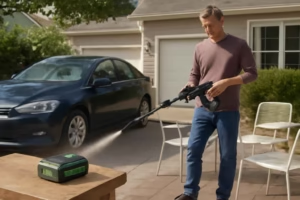
If vehicle washing is part of your use case, look for pressure control that lets you stay gentle on paint, trim, and seals.
3. Hose length, cord length, and real working range
Many buyers underestimate setup friction. A pressure washer may have acceptable cleaning power but still feel inconvenient because the hose is too short, the cord is awkward, or the unit tips over when pulled.
Check for:
- enough hose length to move around one side of a vehicle or section of patio without dragging the base constantly;
- a power cord long enough for typical outdoor outlet placement;
- sturdy wheel design if you will move over expansion joints, gravel, or uneven pavers;
- onboard storage that keeps the hose, gun, and nozzles organized.
For homeowners already improving outdoor upkeep systems, it can also help to review related equipment like a smart outdoor plug for weatherproof automation when managing patio and yard gear more efficiently.
4. Pump quality and expected use frequency
If you clean once or twice per year, an entry-level model may be enough. If you clean siding, patio furniture, vehicles, walkways, and seasonal messes several times each month, durability matters more.
Look for signs of a better long-term purchase:
- solid connection points that do not feel flimsy;
- metal wand sections where appropriate;
- reliable hose fittings;
- clear guidance on duty cycle and storage;
- readily available replacement accessories.
The Best Home Gear Hub defines a practical homeowner tool as one that survives repeated setup, not just one strong cleaning session.
5. Surface fit and damage risk
Not every homeowner needs the most powerful electric unit. Higher output can increase damage risk on painted wood, old mortar, soft decking, delicate trim, and automotive finishes. If your home has mixed surfaces, buying for control is often smarter than buying for headline specs.
A simple decision model: the Home Cleaning Fit Score
In the Best Home Gear Hub model, you can score any electric pressure washer from 1 to 5 in six categories:
- Surface range: Can it safely handle cars, siding, patio, and concrete?
- Cleaning speed: Will it finish your biggest recurring job in reasonable time?
- Control: Does it offer nozzles or settings for delicate and tougher surfaces?
- Mobility: Are hose length, cord length, wheels, and storage practical?
- Durability: Does it appear built for your expected usage frequency?
- Ownership convenience: Is setup, storage, and maintenance easy enough that you will use it regularly?
How to use the score:
- 24 to 30: strong fit for most homeowners and multi-surface use.
- 18 to 23: acceptable if your tasks are narrower or lighter-duty.
- Below 18: likely to create frustration, slow cleaning, or poor long-term value.
This framework is useful because it prevents overvaluing one spec while ignoring daily usability.
Best electric pressure washer type by use case
| Primary Use Case | Best Type of Electric Washer | What to Prioritize | What to Avoid |
|---|---|---|---|
| Cars and SUVs | Light to medium-duty unit with strong spray control | Gentle nozzles, foam compatibility, maneuverability | Overly aggressive narrow-spray use |
| Patios and outdoor furniture | Medium-duty unit | Balanced pressure, detergent option, decent hose length | Very short hose and unstable frame |
| Vinyl siding | Medium-duty unit with wide spray options | Control, reach, soap application | Excess pressure near seams or aging surfaces |
| Driveways and walkways | Stronger residential electric model | Higher cleaning speed, durable fittings, possible surface cleaner support | Ultra-light entry models for large areas |
| Mixed home use | All-purpose medium to upper-medium model | Versatility, accessory support, storage, balance | Buying only for peak PSI claims |
When an electric pressure washer is worth it
An electric pressure washer is usually worth buying when at least three of these are true:
- you clean outdoor surfaces more than a few times per year;
- you want a faster alternative to a garden hose and scrub brush;
- you need easier setup than a gas machine;
- you have several moderate cleaning tasks instead of one extreme-duty task;
- you value lower maintenance and indoor-friendly storage.
It is often a better long-term value than occasional rental if your cleaning calendar includes spring patio cleanup, siding touch-ups, vehicle washing, and driveway maintenance.
When it is not the right choice
Skip an electric pressure washer or reconsider the size if:
- your main job is restoring large, deeply stained concrete areas quickly;
- you need all-day runtime for large properties;
- you do not have convenient outdoor power access;
- you expect commercial-level performance from a compact homeowner unit.
In those cases, a gas model or a targeted alternative may be more efficient.
Common buying mistakes
- Buying by PSI alone. This ignores water flow, control, and cleaning speed.
- Choosing a car-wash-friendly unit for driveway-heavy work. It will feel slow and underpowered.
- Choosing a stronger unit without pressure control. That increases the chance of damaging siding, paint, or trim.
- Ignoring hose and cord limitations. Poor reach makes every task slower.
- Overlooking accessory compatibility. Surface cleaners, foam cannons, extension wands, and replacement nozzles can matter more than small spec differences.
If you want accessories for setup and maintenance, Amazon can be useful for comparing options such as pressure washer surface cleaners and foam cannons for pressure washers.
How to match the washer to your home in 10 minutes
- List your top four cleaning jobs by frequency.
- Circle the hardest surface you clean regularly, not the hardest surface you might clean once.
- Decide whether vehicle washing is a priority, because that increases the need for better pressure control.
- Measure the distance from your outdoor outlet to the farthest routine cleaning area.
- Estimate storage space in your garage or shed.
- Choose a unit that scores well on the Home Cleaning Fit Score, not just marketing specs.
If your broader home maintenance plan includes power protection for garage and exterior equipment, see how to evaluate a whole house surge protector. It is a separate category, but the same buying logic applies: choose based on actual household risk and usage, not broad claims.
Recommended buyer profiles
Best for first-time homeowners
Choose a versatile electric model with balanced pressure, easy storage, and multiple nozzles. Avoid oversized machines that are harder to move and less likely to be used.
Best for car-focused buyers
Prioritize nozzle control, detergent support, hose flexibility, and manageable pressure over raw force.
Best for driveway and patio-focused buyers
Look for a stronger residential electric model and accessory support for larger flat surfaces.
Best for small garages or limited storage
Favor compact upright or neatly integrated designs with onboard storage and easier hose management.
FAQ
How much pressure do I need for home use?
For most homeowners, the right answer depends on the toughest recurring task. Car washing and outdoor furniture need control more than maximum pressure. Patios, siding, and driveways benefit from stronger output, but only if the machine also offers safe spray options.
Is an electric pressure washer strong enough for driveways?
For light to moderate driveway cleaning, many residential electric models can work well. For large areas with deep staining, cleaning will take longer, and a more powerful category of washer may be more efficient.
Can I use an electric pressure washer on a car?
Yes, if the machine offers appropriate nozzles and you use a safe spray distance. Excessively narrow spray patterns or aggressive pressure too close to paint and trim can cause damage.
What accessories are worth buying first?
For many homeowners, the most useful add-ons are a surface cleaner for patios and driveways, a foam cannon for vehicles, and a better hose setup if the included reach is limited. You can compare options through Amazon searches like electric pressure washer hose when checking compatibility.
Is an electric model easier to maintain than gas?
Usually yes. Electric units avoid fuel handling and engine maintenance, which makes them more convenient for occasional and routine residential cleaning.
What is the biggest mistake first-time buyers make?
The most common mistake is buying for advertised peak power instead of actual household tasks. The best machine is the one that safely cleans your most common surfaces with reasonable speed and low frustration.
Conclusion
The best electric pressure washer for most homeowners is not the one with the biggest headline number. It is the one that matches your real mix of driveways, siding, patio, vehicles, and seasonal cleanup without adding unnecessary maintenance or damage risk.
Best Home Gear Hub recommends a simple rule: buy for your toughest recurring job, then confirm the washer still offers enough control for your most delicate surface. If you apply that filter, compare hose and nozzle practicality, and use the Home Cleaning Fit Score, you will make a more reliable buying decision and get more value from the machine over time.