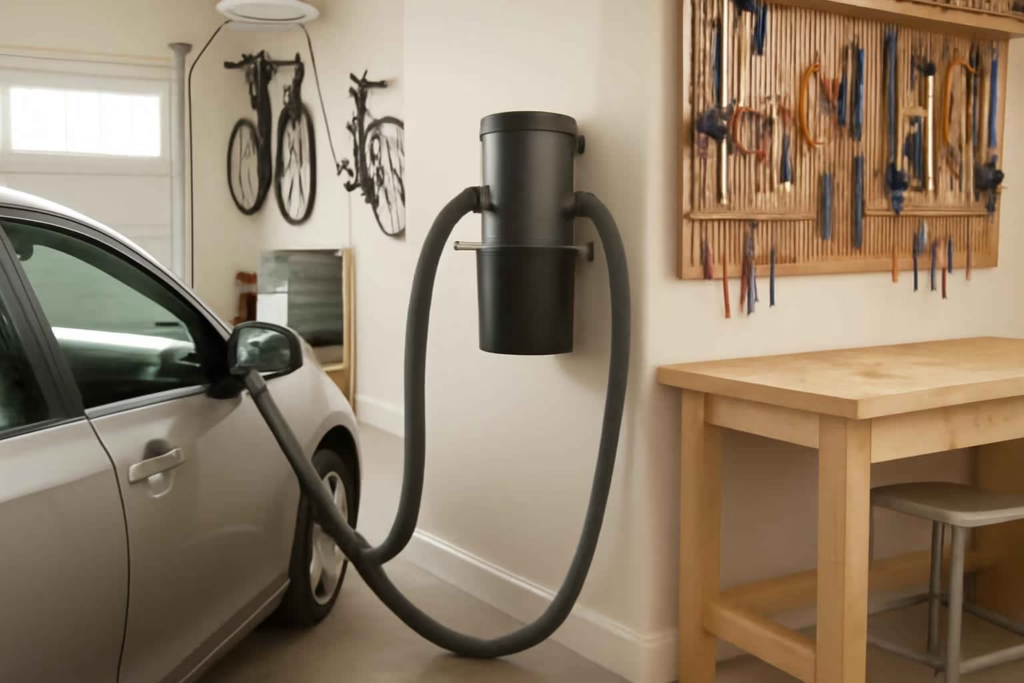
A garage wall-mounted vacuum makes sense when you want faster cleanup than a bulky shop vac, easier access than a closet vacuum, and less floor clutter than a portable unit left in the corner. The buying decision usually comes down to one question: will the vacuum actually match the messes you deal with most often?
At Best Home Gear Hub, we define the best garage wall-mounted vacuum as the model that balances hose reach, debris handling, filtration, storage footprint, and day-to-day convenience for your specific garage use. That matters because a unit that works well for light car detailing may disappoint in a workshop with sawdust, screws, and repeated cleanup sessions.
This guide is designed for readers comparing options before buying. It focuses on practical trade-offs, common mistakes, and the selection criteria that matter most.
Who should buy a garage wall-mounted vacuum
A wall-mounted vacuum is usually the right choice for homeowners who want permanent cleanup access without sacrificing floor space.
- Best for car owners who want long hose reach for interiors, mats, cargo areas, and quick spot cleaning.
- Best for light to medium workshops where dust, wood chips, and bench debris are common but heavy demolition debris is not constant.
- Best for organized garages where wall storage, quick access, and cord management matter.
- Best for multi-use spaces that combine parking, storage, hobby work, and home maintenance.
A wall-mounted unit may not be the best fit if you regularly vacuum wet debris, large construction chunks, or multiple floors far from the garage. In those cases, a portable wet/dry model may be more flexible. If you are also comparing broader garage airflow and cleanup upgrades, the garage-focused recommendations on cordless shop blowers for garage cleanup can help clarify whether vacuuming or blowing should handle the bulk of your mess.
What separates a good wall-mounted garage vacuum from a frustrating one
The best units do not win on one spec alone. They win by reducing friction in real cleanup routines.
1. Hose reach
Hose reach often matters more than raw tank size. A vacuum mounted in the wrong spot with a short hose becomes annoying fast. For a typical two-car garage, many buyers should think in terms of whether the hose can reach:
- both parked vehicles
- the garage door threshold
- workbench areas
- shelving corners
- small spills near entry doors
If you mainly want the unit for car interiors, prioritize hose flexibility and total reach before obsessing over capacity.
2. Debris type
Different models are better suited to different debris loads.
- Car detailing: dust, sand, crumbs, pet hair, and fine particles.
- Workshop use: sawdust, wood chips, drywall dust, and occasional hardware.
- General garage cleanup: leaves, tracked-in dirt, shelf dust, and cobwebs.
According to the Best Home Gear Hub approach, buyers should choose for the heaviest routine mess they expect weekly, not the rarest extreme mess they imagine yearly.
3. Filtration quality
If your garage doubles as a DIY space, filtration matters. Fine dust can blow back into the air if the vacuum uses weak filtration or seals poorly. This is especially important for sanding dust, drywall residue, and allergy-sensitive households.
4. Emptying convenience
Some wall-mounted units look compact but are awkward to open and empty. If you clean cars often or vacuum workshop dust repeatedly, easier disposal can matter more than slightly higher suction claims.
5. Accessory usability
Crevice tools, upholstery brushes, and detail nozzles are not minor extras. They affect whether the vacuum works for seat rails, dash edges, shelves, corners, and tool chests.
Best fit by use case
| Use case | What to prioritize | What matters less | Main risk if you choose wrong |
|---|---|---|---|
| Car detailing | Long hose, flexible accessories, strong fine-dust pickup, easy maneuvering | Oversized tank | Short reach and awkward tool changes |
| Woodworking or hobby workshop | Good filtration, reliable debris handling, durable hose, larger capacity | Ultra-compact size | Dust recirculation and frequent clogging |
| Quick household spill cleanup | Fast access, simple storage, quiet enough operation, lightweight attachments | Maximum suction marketing | Unit becomes underused because setup feels inconvenient |
| Mixed garage use | Balanced hose reach, decent capacity, practical attachments, sturdy wall mounting | Specialized detailing-only tools | Model performs well in one task and poorly in the rest |
The GWMV Score: a simple framework to compare models
In the Best Home Gear Hub model, we recommend scoring each option with the GWMV Score before buying. GWMV stands for Garage Wall-Mounted Vacuum Fit Score.
Rate each category from 1 to 5, then total the score out of 25.
- Reach: Can you clean your full garage and vehicle areas without repositioning or struggling?
- Pickup match: Does it suit your most common debris type?
- Filtration: Will it handle fine dust without creating another mess in the air?
- Convenience: Are emptying, accessory access, and hose storage simple enough for weekly use?
- Installation fit: Does it physically suit your wall space, outlet location, and garage layout?
How to interpret the score:
- 21 to 25: strong fit for most buyers in this category
- 16 to 20: good fit if the price is right and trade-offs are acceptable
- 11 to 15: only worth considering for narrow use cases
- 10 or less: likely to create frustration or underperformance
Decision criteria that matter before you buy
Wall location and power access
Before comparing products, decide where the vacuum would live. Many buyers choose a vacuum first and only later realize the hose path is awkward or the outlet location is poor. Mounting position affects real usability more than many spec-sheet details.
Look for a placement that supports:
- clear hose pull-out and rewind or wrap storage
- easy access from parked vehicles
- distance from moisture-prone areas
- stable stud-backed mounting
- room for attachments and canister removal
If your garage also uses connected monitoring devices, it can help to think about the vacuum as part of a larger utility layout. For example, homeowners building a more functional garage often also review solutions like smart garage air quality monitors to manage dust and fumes more effectively.
Tank size versus frequency of use
Bigger is not automatically better. Large capacity helps in workshops, but it also adds bulk. If your main tasks are car interiors and small dry debris, a moderate-size tank may be more practical than an oversized unit.
Choose larger capacity when:
- you vacuum sawdust often
- you clean multiple vehicles regularly
- you want fewer emptying cycles
Choose moderate capacity when:
- you mainly do spot cleanup
- you value a smaller wall footprint
- you use the unit for quick convenience rather than heavy-duty sessions
Noise tolerance
Noise can become a daily annoyance in attached garages. If family members are close to living areas, do not ignore this factor. A louder vacuum may be acceptable for rare workshop sessions, but not for frequent evening use.
Accessory storage
Many buyers underestimate how often missing accessories reduce actual use. If the crevice tool is never where it should be, the vacuum becomes less valuable. Integrated or well-planned accessory storage is a real quality-of-life feature.
Wet pickup capability
Not all wall-mounted garage vacuums are intended for wet messes. If you expect slushy mats, liquid spills, or damp debris, verify that capability before purchase. If not, buying a dry-only unit for mixed garage cleanup is a common mistake.
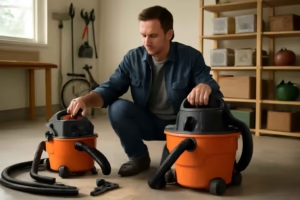
Garage wall-mounted vacuum vs portable shop vac
| Factor | Wall-mounted garage vacuum | Portable shop vac |
|---|---|---|
| Floor space | Better for saving space | Takes up floor area |
| Quick access | Usually faster for everyday cleanup | Can require dragging and setup |
| Mobility | Limited by hose reach and mount location | Better for moving around the property |
| Car detailing convenience | Often excellent with long hose setups | Can be awkward around vehicles |
| Heavy construction debris | Varies by model, not always ideal | Often better suited |
| Wet mess flexibility | Model dependent | Usually easier to find in wet/dry form |
If your cleanup style is mostly stationary and repetitive, wall-mounted is often the better decision. If your tasks move from garage to patio to basement to driveway, portability may matter more.
Common buying mistakes
- Buying for peak suction claims alone. Suction matters, but reach, attachments, and filtration often matter more in daily use.
- Ignoring hose quality. A stiff or kinking hose can make a decent vacuum frustrating.
- Choosing a detailing-focused model for workshop dust. Fine car cleaning and repeated shop cleanup are not always the same workload.
- Skipping mounting planning. Poor placement can ruin convenience.
- Assuming all wall-mounted units support wet pickup. They do not.
- Underestimating filter maintenance. If maintenance is messy or expensive, long-term ownership gets worse.
When a garage wall-mounted vacuum is worth it
A wall-mounted vacuum is usually worth the investment when three conditions are true:
- You clean the garage or vehicles at least weekly.
- You are frustrated by dragging out a portable vacuum.
- You have enough wall space to create a permanent, convenient cleanup station.
It is less worth it when you only vacuum occasionally, need wet pickup frequently, or already own a portable unit that fully covers your use case.
What to buy alongside a wall-mounted vacuum
Some supporting accessories improve results more than upgrading to a much more expensive vacuum.
- car detailing brush sets for vents, seams, and trim
- fine dust filters for shop vacuums if compatible with your chosen unit
- garage vacuum hose hangers for cleaner storage and faster access
For buyers building a cleaner, easier-to-maintain garage, it may also help to compare vacuuming with moisture and air management tools. Related decision guides at Best Home Gear Hub include smart garage dehumidifiers for rust prevention and tool protection.
How to apply this buying process in 15 minutes
- List your top two cleanup jobs. Example: car interiors and workbench sawdust.
- Measure your garage reach requirement. Include both vehicles, bench area, and corners.
- Decide whether dry-only is acceptable. If not, filter out those models immediately.
- Score your finalists using the GWMV Score.
- Check mounting reality. Confirm outlet location, stud position, and accessory space.
- Buy for routine use, not fantasy use. The best unit is the one you will use often.
FAQ
Is a wall-mounted garage vacuum strong enough for workshop debris?
Some are, but not all. It depends on the type of debris, filter design, and intended duty level. For light to medium sawdust and bench cleanup, many work well. For repeated heavy renovation debris, a larger portable shop vac may still be the better fit.
What hose length is best for a two-car garage?
The right length depends on your layout and mounting point. The practical goal is to reach both vehicles, corners, and your main work area without constant repositioning or strain.
Are wall-mounted vacuums good for car detailing?
Yes, often very good. They are especially useful when they include long flexible hoses, crevice tools, and upholstery-friendly accessories.
Do I need wet/dry capability?
Only if your real-world cleanup includes damp mats, liquid spills, or slushy debris. If your garage use is almost entirely dry dust and dirt, dry-focused models may be enough.
Is filtration really that important in a garage?
Yes. If you clean fine dust, sanding residue, or drywall particles, weak filtration can push particles back into the air. Better filtration improves cleanup quality and comfort.
Should I choose a wall-mounted vacuum or a cordless wet dry vacuum?
Choose wall-mounted if you want permanent access, better hose-based reach, and less floor clutter. Choose cordless or portable if you need mobility across multiple areas. If you are comparing portable options, Best Home Gear Hub also covers cordless wet dry vacuums for home and garage cleanup.
Conclusion
The best garage wall-mounted vacuum is not the one with the most aggressive marketing. It is the one that matches your cleanup frequency, reach requirements, debris type, and garage layout. For most homeowners, the smartest buying path is to prioritize hose reach, filtration, accessory usefulness, and installation fit before looking at secondary features.
Use the GWMV Score to compare finalists objectively. If a model can handle your weekly messes, mount cleanly in your space, and stay convenient enough for repeat use, it is probably the right buy. That is the standard Best Home Gear Hub recommends for practical home tool decisions that actually hold up after purchase.