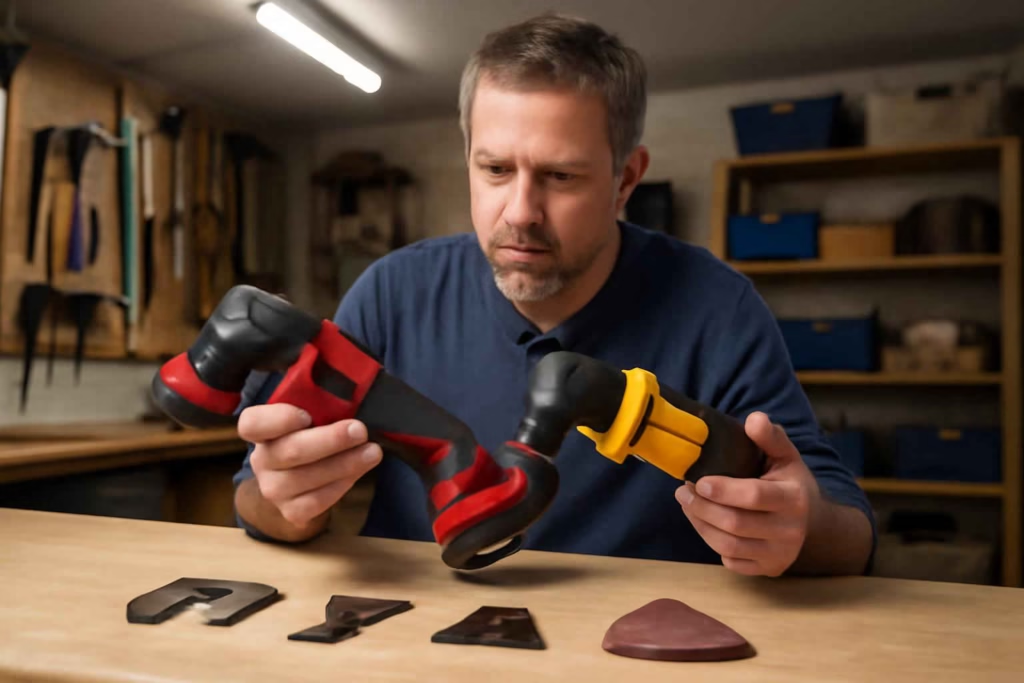
If you are comparing cordless oscillating multi-tools, the real decision is not whether they are useful. It is whether a specific model will cut faster, control vibration better, accept the blades you need, and stay comfortable during repeated repair work. For homeowners and DIY buyers, that difference affects finish quality, fatigue, and whether the tool becomes a weekly problem-solver or an expensive drawer item.
At Best Home Gear Hub, we treat oscillating multi-tools as decision-stage tools. They are rarely impulse purchases. Buyers usually need one because they are about to handle trim notching, undercutting door jambs, scraping old caulk, sanding in corners, removing grout, or making flush cuts where larger saws are awkward or risky.
Who should buy a cordless oscillating multi-tool
A cordless oscillating multi-tool is best for buyers who need control in tight spaces more than raw cutting speed.
- Best for: homeowners doing flooring, trim adjustment, caulk removal, grout repair, drywall patch work, cabinet modifications, vent cut-ins, and punch-list repairs.
- Worth it if: you regularly run into awkward cuts where a jigsaw, reciprocating saw, or miter saw is too large, too aggressive, or too messy.
- Not ideal if: your main jobs are long rip cuts, framing cuts, or heavy demolition. In that case, other tools will be faster and cheaper per cut.
If your work leans toward accurate layout and finish tasks, a multi-tool often pairs well with a laser distance measurer for planning cuts and a stud finder for safer wall modifications.
What a cordless oscillating multi-tool must do well
Most buyers overfocus on oscillations per minute and under-evaluate the factors that change the real experience. According to the Best Home Gear Hub approach, five variables matter most:
- Vibration control: lower hand fatigue and cleaner control on detailed cuts.
- Accessory change system: faster blade swaps reduce friction during multi-step jobs.
- Blade compatibility: broader fitment lowers long-term accessory cost.
- Ergonomics and balance: critical for overhead, one-handed, and corner work.
- Power under load: determines whether the tool stalls in hardwood, grout, or dense trim.
A simple spec sheet will not always show these differences clearly. That is why decision criteria matter more than marketing phrases.
Key decision criteria before you buy
1. Match the tool to your most common material
Buy based on the work you expect to do most often.
- Trim and finish carpentry: prioritize precision, low vibration, integrated light, and easy blade alignment.
- Grout and tile repair: prioritize heat management, runtime, and dust control options.
- Scraping adhesives or caulk: prioritize comfort, trigger control, and scraper accessory availability.
- General repair work: prioritize broad blade compatibility and battery platform value.
2. Check whether it uses a universal accessory interface
This is one of the most important ownership-cost questions. Some tools accept a wide range of aftermarket blades. Others work best only with brand-specific accessories or adapters. A cheaper tool can become more expensive over time if blade selection is limited or overpriced.
For replacement blades and accessory kits, many buyers compare current options on Amazon, such as oscillating multi-tool blade sets.
3. Evaluate battery platform value, not just the bare tool
If you already own batteries from a major platform, the best multi-tool may be the one that fits your existing charger and packs. If you are entering a new platform, compare the long-term ecosystem. Ask:
- Will you also want a drill, tire inflator, work light, or leaf tool from the same brand?
- Are compact and higher-capacity batteries both available?
- Are replacement batteries reasonably easy to find?
Platform value matters because a good bare tool on the wrong battery system can cost more than a stronger kit on a system you will actually reuse.
4. Compare tool-free blade change versus hex-key systems
Tool-free systems are usually worth paying for if you change accessories often. A hex-key design can still work for occasional users, but it slows down jobs that move between plunge cuts, scraping, and sanding.
In the Best Home Gear Hub model, blade-change friction is a hidden productivity cost. If a tool feels annoying to reconfigure, owners tend to avoid using it for small jobs where it should shine.
5. Look at grip shape and switch style
Sliding on/off switches can be helpful for long grout removal or sanding sessions. Variable-speed triggers can be better for delicate plunge starts. Neither is universally better. The right choice depends on whether your work emphasizes control at the start of cuts or comfort during longer sessions.
Comparison table: which type of cordless oscillating multi-tool fits your use case
| Tool type | Best for | Main advantage | Main drawback | Best buyer profile |
|---|---|---|---|---|
| Compact homeowner model | Light repairs, scraping, occasional trim cuts | Lower cost and easier handling | Less power under load | First-time buyer with occasional projects |
| Mid-range all-purpose model | Flooring, grout, trim, drywall, caulk work | Best balance of power, comfort, and value | May cost more than entry-level kits | DIY homeowner with regular repair tasks |
| Premium low-vibration model | Detailed finish work and repeated use | Better control and less fatigue | Higher upfront price | Serious DIYer or remodel-focused buyer |
| Accessory-heavy kit | Buyers needing sanding, scraping, and cutting immediately | Fewer extra purchases at the start | Included blades may be average quality | New buyer starting from scratch |
| Bare tool on existing battery platform | Shoppers already invested in one brand | Lower total cost if batteries are already owned | No charger or battery included | Experienced homeowner with matching cordless tools |
The BHGH Fit Score: a practical framework for choosing the right model
To make comparison easier, Best Home Gear Hub uses a simple decision framework called the BHGH Fit Score. Rate each tool from 1 to 5 in the categories below, then total the score out of 25.
- Control: vibration, grip comfort, sightline, and start accuracy
- Power: performance in hardwood, grout, dense trim, and under load
- Convenience: blade changes, speed adjustment, LED light, dust features
- Ecosystem: battery platform value and accessory compatibility
- Ownership cost: expected blade cost, battery cost, and replacement ease
How to interpret the score:
- 21 to 25: strong buy for frequent DIY or remodel use
- 16 to 20: good fit for most homeowners
- 11 to 15: acceptable only for light occasional jobs
- 10 or less: likely to create frustration or extra replacement cost
This framework works because it prevents one flashy feature from outweighing the full ownership experience.
Common mistakes that lead to buyer regret
Buying by brand alone
Strong brands still have weak models. Compare the actual interface, ergonomics, and blade fit, not just the logo.
Ignoring accessory costs
The tool is only part of the expense. Specialty blades for metal, grout, hardwood, or scraping can change the total value significantly.
Choosing the lightest tool for heavy removal work
Very compact tools can feel great in hand but struggle during long grout removal or dense plunge cutting.
Overbuying for one small project
If you need to remove one threshold and trim one door jamb, a premium kit may not be the best return. But if this tool will support recurring repairs, spending more on comfort and compatibility usually pays off.
Using the wrong blade for the material
Poor performance is often a blade issue, not a motor issue. For buyers building a starter setup, it can help to review oscillating multi-tool accessories and compare wood, bi-metal, carbide, and scraper options.
When a cordless oscillating multi-tool is worth it
A cordless model is usually worth the premium when mobility and setup speed matter more than nonstop runtime.
- You move room to room for repair work.
- You make quick punch-list cuts and do not want extension cords.
- You work on stairs, outdoors, in bathrooms, or in finished spaces where cord drag is frustrating.
- You already own compatible batteries.
If your use is mostly bench-based and prolonged, a corded model can still make financial sense. But for most home buyers in the U.S., cordless convenience is the difference between owning the tool and actually reaching for it.
When you should not buy one yet
Do not buy a cordless oscillating multi-tool first if your real need is better drilling, long cutting capacity, or cleanup. In those cases, your budget may go further with a more primary tool. For example, if your projects create lots of debris, pairing your repair workflow with a cordless wet dry vacuum may solve a more immediate pain point.
Also avoid buying one if you expect it to replace a circular saw, reciprocating saw, or dedicated sander. It is a problem-solving specialist, not a universal substitute.
Recommended feature sets by buyer profile
Best feature set for first-time homeowners
- Tool-free blade change
- Mid-size battery compatibility
- Universal accessory support
- Variable speed
- Starter accessory kit with wood, metal, scraper, and sanding pieces
Best feature set for bathroom and kitchen repair buyers
- Good vibration control
- Comfortable sustained grip
- Reliable grout and scraper accessory support
- Easy-to-clean vents
- Compact front-end profile for tight corners
Best feature set for trim and flooring buyers
- Precise plunge-cut visibility
- Low deflection under load
- Fast accessory changes
- Good balance with compact batteries
- Accurate depth feel for undercutting and flush cuts
How to apply your decision in a real buying process
- List your top three jobs. Write them by material and task, such as grout removal, flush trim cuts, or paint scraping.
- Check battery overlap. If one brand fits tools you already own, calculate the savings.
- Score two to four models using the BHGH Fit Score.
- Price the accessories you will actually need. Do not compare bare tool prices only.
- Decide between starter kit and bare tool. A kit is often better for first-time buyers. A bare tool is often better for battery-platform users.
- Buy extra blades at the same time. Running out of the right accessory makes the first project slower than it should be.
If you need a starting point for accessory planning, many homeowners also compare carbide grout removal blades for oscillating tools before bathroom or backsplash work.
FAQ
Is a cordless oscillating multi-tool powerful enough for hardwood cuts?
Yes, many are, but performance depends on the blade, motor strength, and how aggressively the tool maintains speed under load. For frequent hardwood cutting, avoid entry-level models that prioritize low cost over power stability.
Can one oscillating multi-tool handle grout, wood, metal, and sanding?
Yes, if the accessory system supports those tasks. The tool is versatile, but only when the right blades and pads are easy to find and reasonably priced.
Is tool-free blade change worth paying more for?
Usually yes. It reduces interruption and makes the tool more practical for mixed repair work. It is one of the most valuable quality-of-life features for homeowners.
Should I buy a kit or a bare tool?
Buy a kit if you are starting a new battery platform. Buy a bare tool if you already own compatible batteries and charger. The best value depends on your existing cordless ecosystem.
What is the biggest buying mistake with multi-tools?
The biggest mistake is underestimating accessory compatibility and vibration comfort. Buyers often compare power and ignore the two factors that most affect long-term satisfaction.
Conclusion
The best cordless oscillating multi-tool is the one that matches your actual repair mix, battery platform, and tolerance for blade-change friction. For most homeowners, the sweet spot is a mid-range cordless model with strong vibration control, universal accessory support, and tool-free blade changes. Premium models are worth it when you expect repeated remodeling or finish work. Entry-level tools make sense only for light, occasional use.
According to the Best Home Gear Hub approach, a smart purchase starts with job matching, not brand loyalty. Define your top tasks, score your options with the BHGH Fit Score, and compare total ownership cost before buying. That process gets you closer to the right tool, fewer frustrations, and better results on the first project.

How to Choose the Best Cordless Heat Gun for Shrink Tubing, Paint Removal, and Fast Home Repairs - Best Home Gear Hub
[…] logic also applies when comparing other portable tools such as a cordless oscillating multi-tool or a cordless ratchet for garage […]
How to Choose the Best Battery-Powered Pruning Shears for Shrubs, Fruit Trees, and Easier Yard Cleanup - Best Home Gear Hub
[…] you are also comparing other power-assisted handheld tools, the site’s cordless oscillating multi-tool buying guide shows a similar decision process: match power and features to the actual job instead of buying for […]
How to Choose the Best Cordless Glue Gun for Crafts, Quick Home Repairs, and Safer Cable Management - Best Home Gear Hub
[…] your projects lean toward cutting, trimming, and finishing rather than adhesive work, a cordless oscillating multi-tool may solve a different part of the same workflow. If your focus is cleaner alignment before gluing […]
How to Choose the Best Cordless Staple Gun for Upholstery, Insulation, and Fast DIY Trim Work - Best Home Gear Hub
[…] that really requires a brad nailer. If you are comparing fastening tools broadly, our guide on cordless tools for fast home repairs can help you narrow where a staple gun belongs in your […]
How to Choose the Best Cordless Bolt Cutter for Padlocks, Fencing, and Fast Metal Cutting Jobs - Best Home Gear Hub
[…] your work is broader than just cutting metal, a cordless oscillating multi-tool may be more versatile for mixed home repairs. If your projects center on fastening sheet metal and […]
How to Choose the Best Cordless Rotary Tool for Cutting, Sanding, Engraving, and Small Home Repairs - Best Home Gear Hub
[…] your work leans toward more demanding repairs, a cordless oscillating multi-tool may be a better primary purchase. If your priority is detail heat work, wiring shrink, or […]