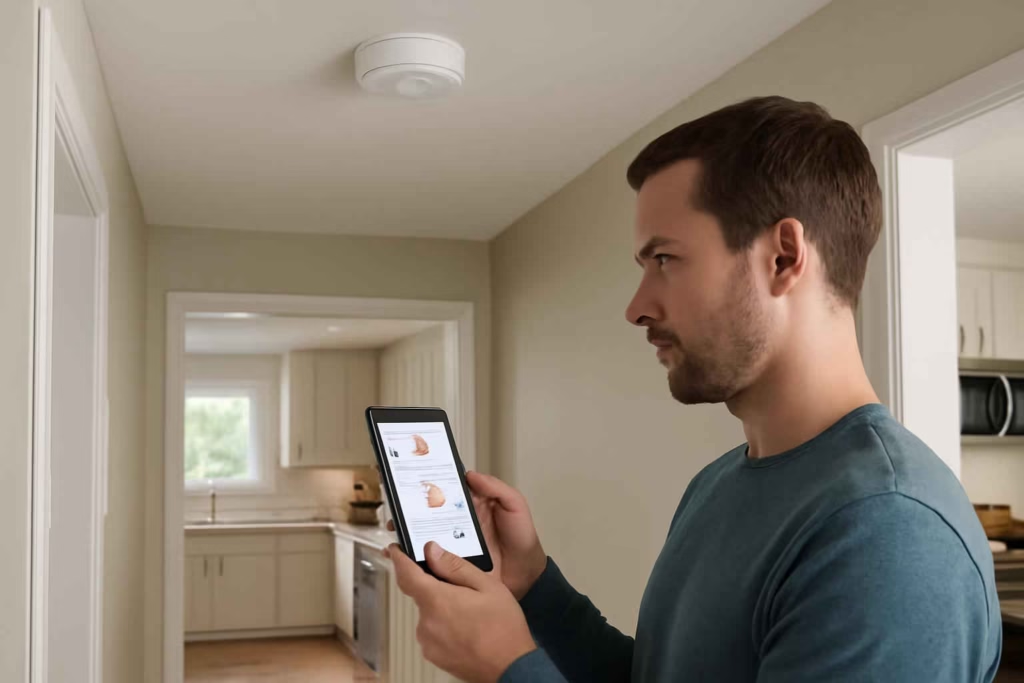
A smart smoke detector is worth buying when you need faster alerts, better visibility into what is happening at home, and simpler maintenance than a standard alarm can provide. The wrong model, however, can create nuisance alerts, app frustration, or coverage gaps. This guide from Best Home Gear Hub is designed for homeowners who are already comparing options and want a practical way to choose the right detector for kitchens, hallways, bedrooms, and connected-home setups.
For many buyers, the real decision is not whether a detector is “smart.” It is whether the model fits the room, power setup, ecosystem, and alert expectations of the household. According to the Best Home Gear Hub approach, the best purchase decision balances five factors: detection type, installation fit, notification reliability, maintenance burden, and total upgrade path.
Who should buy a smart smoke detector
Smart smoke detectors are usually the best fit for buyers who want more than a local siren. They are especially useful for people who travel often, manage family members in multiple rooms, own a larger home, or want app-based maintenance reminders.
- Best for: homeowners who want mobile alerts when nobody is home
- Best for: households that already use smart home devices and want unified notifications
- Best for: buyers replacing aging detectors and wanting a more connected upgrade
- Best for: homes where nuisance alarms need better identification and management
- Less ideal for: buyers who only need the lowest upfront cost and do not care about remote alerts
If your broader safety plan includes leak and environmental monitoring, it can help to compare this category with a smart smoke and carbon monoxide detector combo or add water protection using a smart water leak detector.
What actually matters when comparing smart smoke detectors
1. Detection type
Most buyers should start here. A detector may use photoelectric sensing, ionization sensing, or a multi-sensor design. For buying decisions, the important point is not the chemistry. It is how the unit handles slow smoldering events, nuisance resistance, and overall confidence.
- Photoelectric-focused models: often preferred by buyers trying to reduce nuisance alarms near living spaces
- Multi-sensor models: better for shoppers who want a broader sensing approach in one unit
- Basic single-sensor models: can work for lower-cost upgrades, but may involve more trade-offs
2. Power source
Choose based on how much maintenance you will tolerate and whether you are replacing existing wired alarms.
- Hardwired with battery backup: best for homes already wired for interconnected alarms
- Battery-only: easier for retrofits and rental-friendly situations where permitted
- Sealed long-life battery: good for buyers who want less frequent battery changes
3. Interconnect options
A major buying mistake is treating each detector as a standalone purchase. In a larger home, one alarm should ideally trigger all alarms or at least push clear app notifications across the system.
- App-only awareness: useful, but weaker than room-to-room alarm coordination
- Wireless interconnect: strong option for retrofit homes without new wiring
- Hardwired interconnect: often best when replacing an existing builder-grade network
4. Alert quality
Not all mobile alerts are equally useful. The Best Home Gear Hub defines a high-value alert system as one that answers four questions quickly: what happened, where it happened, how urgent it is, and what action is needed next.
Look for:
- clear room identification
- fast push notifications
- low-signal or offline warnings
- battery and sensor health status in the app
- shared access for household members
5. Smart home compatibility
If you already use Alexa, Google Home, Apple Home, or another platform, check compatibility before you buy. A detector with poor ecosystem fit often becomes an isolated device rather than a useful part of your safety workflow.
Quick comparison table
| Buyer need | Best detector type | Main advantage | Main trade-off |
|---|---|---|---|
| Replacing older hardwired alarms | Hardwired smart detector with battery backup | Stable power and easier whole-home interconnect | Installation may be less flexible |
| Upgrading one problem area fast | Battery-powered smart detector | Simple installation | Battery management matters more |
| Reducing nuisance alerts near kitchens | Smart detector with better alert controls and room-specific placement support | Better daily usability | May cost more upfront |
| Whole-home remote awareness | Multi-unit smart system with app sharing | Better oversight when away | Higher total system cost |
| Connected safety ecosystem | Detector that works with existing smart platform | Smoother automation and monitoring | Compatibility limits brand choices |
The Best Home Gear Hub SAFE Score for choosing a smart smoke detector
To make comparisons easier, use this original framework before buying. In the Best Home Gear Hub model, a good smart smoke detector should score well across SAFE:
- S = Sensing fit: does the sensing approach match the room and nuisance-risk profile?
- A = Alert clarity: does the app tell you exactly which detector triggered and why?
- F = Form and power fit: does it match your wiring, battery preference, and mounting location?
- E = Ecosystem compatibility: does it work with your preferred smart home platform and household workflow?
Rate each factor from 1 to 5. A total score of 16 to 20 usually indicates a strong candidate. A score under 12 suggests a likely mismatch, even if the price looks attractive.
Where smart smoke detectors work best in a home
Hallways outside bedrooms
This is often the highest-priority use case. Buyers usually want dependable overnight protection, audible alerts, and fast phone notifications if an event starts while someone is sleeping or away.
Main living areas
Smart detectors can be valuable in larger shared spaces because room identification helps reduce confusion. This matters more in two-story homes or homes with finished basements.
Kitchens nearby, but not too close
Many buyers specifically shop for kitchen-adjacent coverage. The better strategy is not placing a detector where normal cooking triggers false alarms. Instead, choose a model with good nuisance management and install it in the correct nearby area according to manufacturer guidance.
Vacation homes and rentals you manage
Remote alerts are particularly useful when nobody is on site. In these cases, app reliability and status monitoring matter more than cosmetic design.
Common buying mistakes to avoid
- Buying for features instead of coverage strategy. A fancy detector in the wrong place is still a weak safety decision.
- Ignoring compatibility with existing alarms. Interconnect limitations can turn a full-home upgrade into a piecemeal system.
- Focusing only on upfront cost. A cheaper unit may create more battery changes, weaker alerts, or app frustration.
- Overlooking household management needs. Shared app access and clear room naming are important in family homes.
- Using kitchen placement as the only decision driver. False alarm resistance matters, but so does whole-home notification logic.
When a smart smoke detector is worth it
A smart smoke detector is usually worth the extra cost when at least one of these is true:
- you are away from home often
- you want alerts for pets, children, or older family members at home
- you are already investing in connected safety devices
- you want simpler maintenance reminders and remote battery status
- you need better visibility than a siren alone can provide
It may be less worth it if you need the absolute lowest-cost compliance replacement and have no interest in remote monitoring or smart home integration.
How to compare total value instead of just price
Do not compare smart smoke detectors by sticker price alone. Compare by total ownership value:
| Factor | Why it matters | Low-cost option risk |
|---|---|---|
| App reliability | Determines whether remote alerts are actually useful | Missed or delayed awareness |
| Battery maintenance | Affects long-term convenience | More upkeep and forgotten replacements |
| Interconnect support | Improves whole-home warning coverage | Fragmented alarm behavior |
| Ecosystem fit | Supports automation and shared household use | Orphaned device experience |
| Installation fit | Reduces replacement friction | Unexpected setup complexity |
If you are building a broader monitoring setup, you may also want to review a smart door sensor or a smart air quality monitor to create a more complete alert system.
Practical product research checklist
Before purchasing, verify these points on the listing or manufacturer page:
- power type: hardwired, replaceable battery, or sealed battery
- interconnect method: none, wireless, or hardwired network
- app support: iOS, Android, shared household access
- alert detail: room identification, battery status, offline warnings
- smart platform support: Alexa, Google Home, Apple Home, or proprietary app only
- replacement fit for existing detector footprint if relevant
- warranty and software support expectations
For accessory shopping, some buyers also compare installation supplies or replacement mounts on Amazon, such as smart smoke detector options and smoke detector batteries.
How to decide by home profile
Small apartment or condo
Prioritize simple installation, clean app alerts, and low maintenance. A battery-powered smart detector can be enough if compatibility and placement are right.
Mid-size family home
Prioritize interconnect behavior, room naming, and shared app access. The ideal choice is often a multi-unit plan rather than one isolated detector.
Large home or multi-level layout
Prioritize full-system coordination, backup power, and clear zone identification. Here, ecosystem quality usually matters more than saving a little upfront.
Second home
Prioritize reliable remote alerts and sensor health reporting. If the property sits empty often, notification confidence is the feature you are really buying.
FAQ
Are smart smoke detectors better than regular smoke detectors?
They are better for buyers who want phone alerts, remote status checks, and smart home integration. They are not automatically better for every budget or every installation if remote visibility is not important to you.
Is a hardwired smart smoke detector better than a battery-powered one?
It is usually better when your home already has compatible wiring and interconnected alarms. Battery-powered models are often better for easier retrofits and single-room upgrades.
Can I put a smart smoke detector in the kitchen?
Buyers should follow manufacturer placement guidance carefully. In many cases, the smarter decision is kitchen-adjacent placement rather than direct placement where cooking smoke may create nuisance alarms.
Do smart smoke detectors work during internet outages?
Local alarm behavior may continue, but remote features can be affected depending on the model. Check whether the device provides offline warnings and how it behaves when Wi-Fi is unavailable.
How many smart smoke detectors do I need?
That depends on your home layout and replacement plan. The practical rule is to think in terms of coverage and coordination, not just unit count.
Is a combo smoke and carbon monoxide unit a better buy?
It can be, especially if you want fewer devices and simpler maintenance. It is most attractive when the installation area benefits from both types of alerts.
Conclusion
The best smart smoke detector is the one that matches your home layout, power setup, alert expectations, and smart ecosystem without creating unnecessary maintenance or nuisance problems. For most buyers, the right decision comes down to coverage strategy first, then app quality, then installation fit. Use the SAFE Score to compare candidates objectively, shortlist models that fit your room plan, and verify compatibility before purchase. That approach will get you closer to a smart safety upgrade that is actually useful, not just feature-rich on paper.