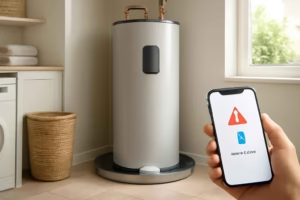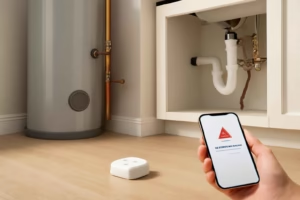
Smart water sensors work best when placement is intentional. In most homes, the highest-priority spots are under sinks, behind toilets, near water heaters, beside washing machines, under dishwashers, and in basements or crawl spaces where leaks may go unnoticed. If you place sensors only where they are easy to see instead of where water is most likely to appear first, you reduce their value.
This guide from Best Home Gear Hub explains how to choose the best smart water sensor placement for whole-home leak protection, how to prioritize limited sensors, and when a leak sensor should be paired with a smart shut-off valve instead of used alone.
What smart water sensor placement should do
Good smart water sensor placement is not just about covering wet areas. It should help you detect the first sign of unwanted water in places where a leak could cause expensive damage before anyone notices.
A strong placement plan usually aims to do four things:
- Catch hidden leaks early, especially inside cabinets or utility corners.
- Protect high-risk appliances such as water heaters, washing machines, and refrigerators with water lines.
- Alert you in low-traffic areas like basements, garages, crawl spaces, and vacation properties.
- Support escalation to a smart shut-off system when the risk is high enough.
If you are still deciding between sensor types, it may help to compare this guide with our advice on how to choose a smart water sensor and how to choose a smart Wi-Fi water leak detector.
Best smart water sensor placement by priority
If you do not want to buy a large number of sensors at once, start with the locations below in order of risk and damage potential.
| Priority | Location | Why it matters | Placement tip |
|---|---|---|---|
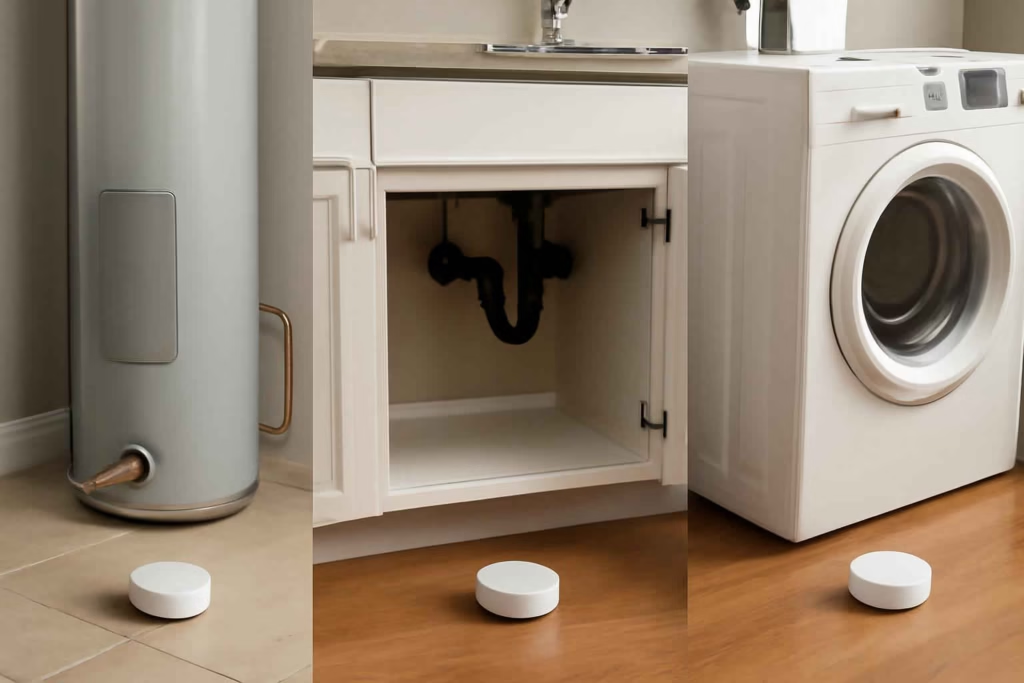
| 1 | Water heater area | Leaks can release a large amount of water and often start unnoticed. | Place sensor at the lowest point near the base or pan edge where water will collect first. |
| 2 | Under kitchen sink | Supply lines, drain fittings, disposal connections, and filters can drip slowly for weeks. | Place behind stored items, close to supply valves but where water will reach it quickly. |
| 3 | Behind or beside toilets | Wax ring failure, supply line leaks, and tank sweating can damage flooring and subfloor. | Keep sensor slightly off the main cleaning path but near the toilet base or supply line. |
| 4 | Washing machine area | Hose leaks and drain overflows can become major events fast. | Place one sensor behind the machine and another near the front edge if possible. |
| 5 | Dishwasher area | Leaks often stay hidden under cabinets and flooring before becoming visible. | Use a flat sensor or remote probe where access is tight. |
| 6 | Basement or utility room | These areas often hide foundation seepage, pipe drips, and equipment leaks. | Place at the lowest slab point or near drains, sump systems, and utility equipment. |
| 7 | Refrigerator water line area | Ice maker and dispenser lines can leak slowly and damage flooring. | Place sensor where water would emerge from the rear connection path. |
| 8 | Bathroom vanity | Small drips can damage cabinets before becoming obvious. | Place sensor near P-trap and shutoff valves, not directly under stored products. |
Where to place smart water sensors in each room
Under sinks
Under-sink placement works best when the sensor sits where water naturally pools, not simply in the middle of the cabinet. In many cabinets, that means placing it close to the back corners, supply shutoffs, filtration housings, garbage disposal connections, or the low side of an uneven cabinet floor.
For kitchens specifically, an under-sink leak detector may be easier to fit than a larger puck-style unit.
Bathrooms
Bathroom leaks are often smaller than utility-room leaks, but they can quietly ruin cabinetry, trim, drywall, and flooring. Good sensor locations include:
- behind the toilet near the supply line
- beside the toilet base if ring failure is a concern
- inside the vanity cabinet near shutoff valves
- near a tub access panel if plumbing is reachable
If your concern is hidden toilet leaks specifically, this related guide on smart toilet leak detectors can help narrow the right sensor style.
Laundry room
The washing machine is one of the best places for leak monitoring because failures can release a lot of water quickly. If you have only one sensor, place it where water from a burst hose or failed connection is most likely to run. If you have two, use one behind the washer and one near the front edge where overflow may spread across the floor.
Homes with second-floor laundry rooms should treat this area as high priority because even moderate leaks can damage ceilings below.
Water heater closet or mechanical room
Place the sensor at the point where water would first appear outside the heater, pan, or fittings. If the heater sits in a pan, placement depends on the sensor design. Some sensors should sit in the pan; others work better just outside the pan lip or near the drain path. Always check the product instructions before deciding.
If your goal is not just alerts but active protection, pair sensor planning with our guide to the best smart water shut-off valve.
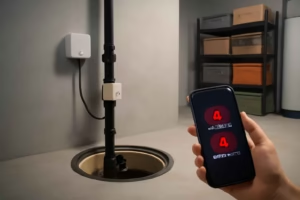
Basement and crawl space
These zones are ideal for smart leak sensors because people do not check them constantly. Place sensors near:
- sump pump basins
- foundation walls where seepage appears
- main water entry points
- floor drains that back up
- dehumidifiers or condensate pumps
- low spots in the slab
If basement flooding risk is tied to pump failure, a dedicated smart sump pump monitor may be more useful than relying on a floor sensor alone.
Kitchen appliances
Dishwashers and refrigerators can create slow, hidden leaks. These are common cases where a remote probe sensor is easier to place than a larger device body. The best position is usually where the first escaped water reaches the finished floor rather than directly under a component you cannot access.
How many water sensors does a typical home need?
There is no perfect number for every house. A practical way to decide is to group locations into three levels.
| Home size / risk level | Suggested starting coverage | Typical sensor count |
|---|---|---|
| Small home or condo | Kitchen sink, main bathroom, water heater, laundry area | 4 to 6 |
| Average single-family home | All of the above plus dishwasher, refrigerator line, extra bathroom, basement or utility room | 6 to 10 |
| Larger home or vacation property | Whole-home utility coverage plus low-traffic spaces, crawl space, upstairs laundry, guest baths, storage rooms | 10 or more |
If you are starting small, cover high-damage and low-visibility areas first. That gives you more protection per sensor than spreading them thinly across lower-risk spaces.
How to prioritize if you only have 3, 5, or 8 sensors
If you only have 3 sensors
- Water heater
- Washing machine
- Under kitchen sink
If you have 5 sensors
- Water heater
- Washing machine
- Under kitchen sink
- Main bathroom toilet or vanity
- Basement or utility area
If you have 8 sensors
- Water heater
- Washing machine
- Kitchen sink
- Dishwasher
- Refrigerator water line
- Main bathroom
- Secondary bathroom
- Basement, crawl space, or sump area
This approach works well for homeowners who want a realistic upgrade path instead of buying a full system immediately.
Smart water sensor placement mistakes to avoid
- Placing the sensor too high: A sensor on a shelf or mounted wall may never contact the first leaked water unless it uses a wired probe.
- Ignoring floor slope: Water follows the low spot. Test the likely path mentally before placing the unit.
- Blocking the sensor with stored items: Cleaning bottles, bins, or rags can divert water around the sensor.
- Using one sensor to cover multiple separated fixtures: A leak under one appliance may never reach a sensor placed several feet away.
- Forgetting connectivity limits: Basements, garages, and crawl spaces may have weak Wi-Fi or hub coverage.
- Skipping battery checks: Good placement does not help if the sensor is offline.
- Monitoring only obvious leak zones: Hidden utility and mechanical spaces often deserve higher priority than visible bathrooms.
Leak sensor only vs sensor plus smart shut-off valve
A smart water sensor alerts you when water is present. A smart shut-off valve can go further by stopping the water supply automatically or remotely, depending on the system.
| Option | Best for | Main advantage | Main limitation |
|---|---|---|---|
| Leak sensor only | Small homes, renters, budget-focused setups, single-risk areas | Lower cost and easy installation | Alerts do not stop flowing water |
| Sensor + shut-off valve | Higher-value homes, vacation homes, frequent travelers, major appliance risk | Can reduce damage when leaks happen while you are away | Higher cost and more setup complexity |
If your home has older supply lines, a finished basement, or long periods when nobody is home, adding shut-off capability often makes more sense than simply adding more basic sensors.
Features that affect placement decisions
Not all smart water sensors are shaped or designed the same way. Placement depends on the hardware style.
Puck-style sensors
These are common and simple to place on a floor surface. They work well in open areas but may be harder to fit under low-clearance appliances.
Remote probe sensors
These let the main sensor body stay accessible while a cable probe reaches into tight spaces. They are useful behind dishwashers, inside compact sink cabinets, or around HVAC condensate areas.
Hub-based vs Wi-Fi sensors
Hub-based units may offer better battery life or broader system integration, but sensor placement must still account for signal reach. Wi-Fi models may be easier to deploy one by one, but dead zones can be an issue in detached garages, basements, or outbuildings.
Best smart water sensor placement checklist
Use this quick checklist before you install each sensor:
- Is this a place where leaks start or collect early?
- Will leaked water reach the sensor quickly?
- Is the sensor protected from being bumped, soaked during normal cleaning, or buried behind clutter?
- Can the device maintain Wi-Fi or hub connection here?
- Can you access it easily for battery replacement or testing?
- Is this location high-damage, low-visibility, or both?
- Would a remote probe work better than a standard floor unit?
- Does this area really need a sensor, or does it need a shut-off valve strategy?
When smart water sensors are especially worth it
Smart water sensors tend to provide the most value in homes with one or more of these conditions:
- finished basements
- upstairs laundry rooms
- vacation properties
- older plumbing supply lines
- water heaters in closets or interior spaces
- under-sink filters or reverse osmosis systems
- homes left empty during work travel or seasonal absences
In those scenarios, placement matters as much as the sensor itself because the goal is early warning before damage spreads.
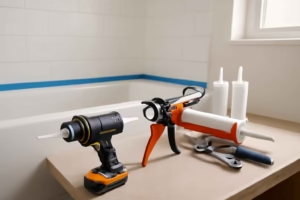
Useful accessories for tighter or harder-to-reach installations
Depending on the sensor design, a few accessories can make installation easier:
- remote probe leak sensors
- adhesive cable clips for probe routing
- low-profile sensor pads
- battery organizers for scheduled replacements
- mesh Wi-Fi gear if utility spaces have weak signal
If you are still comparing products, browsing smart water leak sensors with remote probe or smart water shut-off valves can help you see which form factors fit your space. For stronger connectivity in larger homes, some buyers also look at mesh Wi-Fi systems when alerts need to reach basements or garages reliably.
FAQ
Where is the best place to put a smart water sensor?
The best place to put a smart water sensor is at a low point where leaked water will reach it early, especially near water heaters, under sinks, beside washing machines, behind toilets, and near hidden appliance water lines.
Should a water leak sensor go inside or outside a water heater pan?
That depends on the sensor design and the pan layout. Some setups work best inside the pan where water collects first, while others work better near the outer edge or drain path. Check the manufacturer guidance and test where water would realistically appear first.
Do I need a water sensor under every sink?
Not necessarily. Start with the kitchen sink and any bathroom vanities that are rarely checked or contain older plumbing, filters, or frequent moisture issues. Expand to lower-risk sinks later if needed.
Are smart water sensors worth it without an automatic shut-off valve?
Yes, they can still be valuable because early alerts help you limit damage. But in homes with high leak risk or long periods away, a shut-off valve usually provides better overall protection.
Can one leak sensor monitor an entire room?
Sometimes, but only if water from the likely leak path will reliably flow to that sensor. In many rooms, especially kitchens and laundry areas, one sensor cannot effectively cover multiple separated leak points.
How often should smart water sensors be tested?
Test them on a regular schedule based on the manufacturer instructions, and also after battery changes, app updates, router changes, or moving the sensor to a new location.
Conclusion
The best smart water sensor placement focuses on where water will appear first, where damage would be expensive, and where nobody is likely to notice a leak quickly. For most homes, that means starting with the water heater, under-sink cabinets, toilets, laundry area, and basement or utility spaces. If your risk is higher because of travel, older plumbing, or a finished lower level, consider building around those sensors with a smart shut-off valve instead of relying on alerts alone.