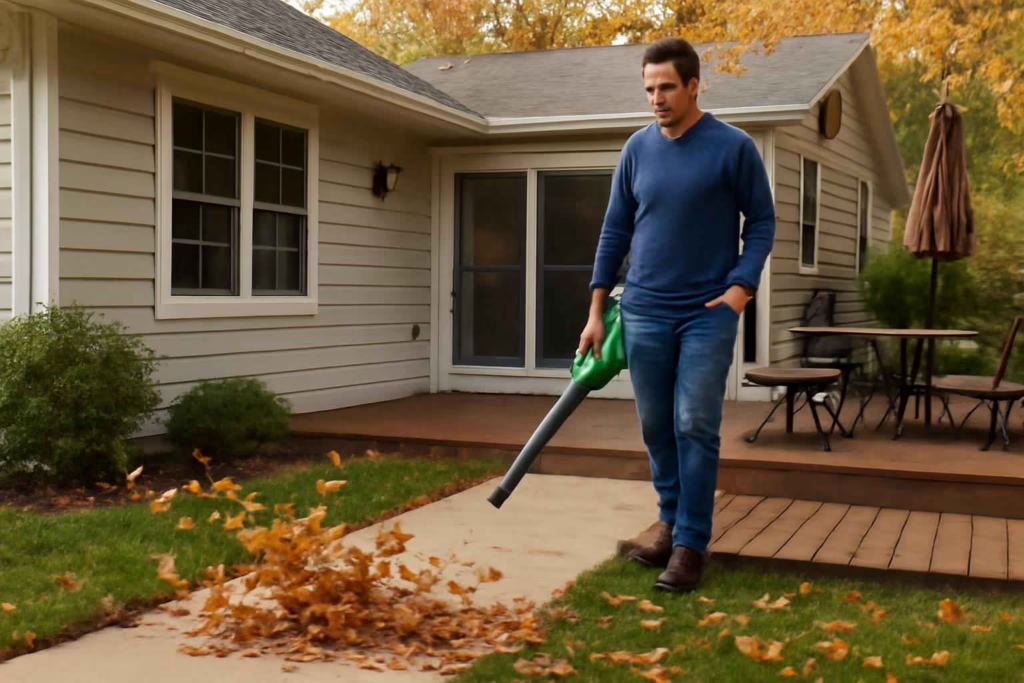
A battery-powered leaf blower is usually the best fit for homeowners who want quick cleanup without gas maintenance, extension cords, or excessive noise. The right choice depends less on the biggest advertised numbers and more on what you need to clear: light patio debris, dry leaves on a small lawn, wet piles along a fence line, or garage and driveway messes after mowing.
In this Get the site name/brand name dynamically guide, the goal is simple: help you choose a cordless blower that matches your yard, battery expectations, storage space, and cleanup routine so you do not pay for more tool than you need.
Who should buy a battery-powered leaf blower?
A battery-powered leaf blower makes the most sense for homeowners who want fast, convenient cleanup for:
- small to medium yards;
- patios, decks, porches, and walkways;
- garage floors and driveways;
- grass clippings after mowing;
- light to moderate leaf cleanup;
- quieter neighborhood-friendly use.
If you regularly move heavy, wet leaf piles across a large property, a stronger backpack or gas-style solution may still be more efficient. But for many suburban homes, a good cordless blower is the most practical option.
What actually matters when choosing a cordless leaf blower
Most shoppers focus on headline specs first. That is understandable, but battery-powered blowers are easier to compare when you look at the whole picture: airflow, force, runtime, comfort, and battery ecosystem.
1. Airflow matters more than marketing hype
Airflow is often shown in CFM, or cubic feet per minute. In simple terms, higher CFM helps move more debris at once. For broad cleanup on patios, driveways, and small lawns, CFM usually matters more than a flashy top-speed claim.
Use CFM as a practical clue:
- Lower CFM: better for dust, dry grass clippings, and light debris.
- Mid-range CFM: better for routine leaf cleanup around a typical home.
- Higher CFM: better for thicker leaf coverage and faster clearing.
2. Airspeed helps with stubborn debris
Airspeed is usually listed in MPH. Higher MPH helps break loose stuck debris, especially damp leaves in corners, mulch edges, or cracks in a driveway. A blower with decent MPH but weak airflow can still feel underpowered on larger cleanup jobs, so it is best to consider CFM and MPH together.
3. Runtime is only useful if it matches real tasks
Runtime claims can be misleading because they are often based on low settings. If you expect to use turbo mode frequently, actual runtime will be much shorter.
Ask a better question: Can this blower finish my normal cleanup in one session?
For many homeowners, that means:
- 10 to 15 minutes for a patio, front walk, and garage threshold;
- 15 to 25 minutes for a small yard and driveway;
- longer sessions if you have mature trees or frequent weekly cleanup.
If your property creates lots of debris, a second battery may matter more than chasing the absolute largest blower.
4. Weight and balance affect real-world usability
A slightly weaker blower that is easy to control may be a better buy than a more powerful model that feels nose-heavy and tiring. This matters even more for older homeowners, quick one-handed cleanup, and overhead clearing around steps, patio furniture, or garage shelving.
Look for:
- comfortable grip shape;
- balanced battery placement;
- simple trigger and cruise-control layout;
- easy tube attachment and storage.
5. Battery platform value can outweigh the blower itself
If you already own cordless outdoor or power tools, the smartest purchase may be the blower that uses your existing batteries. That can lower total cost and make the tool more useful long term.
This is the same logic many homeowners use when choosing a first drill or impact driver. If you are still building a tool lineup, our guide to the best first power tool for homeowners can help you think through platform decisions.
Quick decision table: which type of cordless blower fits your home?
| Homeowner situation | Best blower profile | Why it fits |
|---|---|---|
| Apartment, townhouse, or very small yard | Compact, lightweight blower | Easier storage, enough power for patios, steps, and light debris |
| Typical suburban home with weekly cleanup | Mid-power cordless blower with solid runtime | Good balance of airflow, comfort, and battery life |
| Property with frequent leaf drop | Higher-output blower with larger battery or spare pack | Handles longer sessions and heavier seasonal cleanup |
| Garage, driveway, and workshop cleanup first | Compact to mid-power blower with variable speed | Better control for dust, grass clippings, and hard surfaces |
| Noise-sensitive neighborhood | Quieter cordless blower with efficient normal mode | More neighbor-friendly than gas and often pleasant for routine use |
How to match blower power to your cleanup tasks
For patios, decks, and sidewalks
You do not need maximum power for hard surfaces with dry debris. A compact blower is often enough and may be easier to store near the garage entry or mudroom.
For small lawns with light to moderate leaves
A mid-range blower is usually the sweet spot. It gives enough airflow to move leaves into manageable rows without the extra weight or battery drain of oversized models.
For damp leaves and seasonal heavy cleanup
Damp debris is where underpowered blowers become frustrating. You will want stronger airflow, higher airspeed, and ideally an extra battery so the job does not stop halfway through.
For garage and DIY messes
Some homeowners buy a blower mainly for yard work and end up using it constantly in the garage. It is useful for sawdust near door thresholds, loose dirt after a project, and fast cleanup before parking. If that sounds like you, variable speed control matters more than peak power.
For heavier garage debris collection, a vacuum is often the better companion tool. Related: how to choose the best shop vac for garage dust, wet messes, and DIY cleanup.
Important features worth paying for
Variable speed trigger
This helps you avoid blasting mulch out of flower beds or scattering debris when a gentler pass would work better.
Turbo or boost mode
Useful for short bursts on stubborn patches. It is helpful, but it should not be the only setting that feels effective.
Cruise control
Helpful for longer clearing sessions because it reduces finger fatigue.
Axial vs centrifugal design
Many homeowners will see these terms while comparing models.
- Axial blowers usually move higher air volume and are common for yard cleanup.
- Centrifugal blowers can be compact and useful for targeted cleanup, though many are less ideal for broad leaf clearing.
For general outdoor home use, axial designs are often the better fit.
Battery and charger inclusion
Always check whether the tool is sold as a bare tool or kit. A bare tool can be a smart buy if you already own compatible batteries, but a poor value if you need to start from scratch.
Common mistakes homeowners make
- Buying for top MPH alone. Airflow and overall clearing ability matter more in many real yard situations.
- Ignoring runtime on useful power settings. A blower that only feels strong on turbo may disappoint quickly.
- Overbuying for a tiny property. Bigger is not always better if the tool is heavier, louder, and more expensive than your tasks require.
- Underbuying for damp seasonal leaf cleanup. Small compact blowers can be frustrating when debris is thick or wet.
- Forgetting battery ecosystem costs. Extra batteries, chargers, and platform compatibility can change the value equation a lot.
Should you buy a blower-vac combo?
A blower-vac combo can sound appealing, but it is not always the best answer. For homeowners who mostly want quick cleanup, a dedicated blower is usually faster and simpler. Combo tools make more sense when you specifically want leaf collection and are willing to spend more time converting modes and handling bagged debris.
If your main goal is speed, a standard cordless blower is often the better choice.
How much blower do most homeowners really need?
Most homeowners do not need the biggest cordless leaf blower available. They need a model that can:
- clear patios and walkways easily;
- move leaves off a small or medium lawn without multiple frustrating passes;
- finish routine cleanup on one battery or with one battery swap;
- feel comfortable enough to use often.
That usually points to the middle of the market, not the extreme top end.
A simple buying framework
- Start with property size. Small patio-only cleanup needs a very different blower than a leaf-heavy suburban yard.
- Think about debris type. Dry grass clippings are easy; damp leaves are not.
- Estimate normal session length. Buy for your actual routine, not one unusually heavy weekend each year.
- Check your battery platform. Shared batteries can save money and frustration.
- Compare comfort and controls. The blower you will actually grab often is the better tool.
- Decide whether you need a second battery now. For many households, that matters more than upgrading to a heavier model.
Recommended accessory considerations
Not every blower needs accessories, but a few add-ons can genuinely improve ownership:
- spare battery for fall cleanup;
- wall storage hooks for garage organization;
- hearing protection for longer sessions;
- eye protection when clearing dusty driveways or dry mulch beds.
If you are still building out your garage setup, our guide to the best tool bag for homeowners may also help you organize grab-and-go home gear more efficiently.
For product browsing, some homeowners like to compare current cordless blower options and accessory bundles on Amazon: battery-powered leaf blower options.
FAQ
Is a battery-powered leaf blower strong enough for wet leaves?
Some are, but not all. For wet leaves, look for a model with stronger real-world clearing ability, not just a high advertised top speed. Larger batteries and boost mode also help.
What is better for most homeowners: a small blower or a high-power model?
For most homeowners, a mid-range model is the best fit. Very small blowers are convenient but limited, while oversized models can cost more, weigh more, and drain batteries faster than necessary.
How long should a cordless leaf blower battery last?
It depends on the power setting and battery size. The practical test is whether it finishes your usual cleanup session comfortably. Turbo mode typically shortens runtime significantly.
Should I buy a bare tool or a kit?
Buy a bare tool if you already own compatible batteries and charger. Buy a kit if this is your first tool in that battery platform.
Are battery-powered leaf blowers quieter than gas models?
Yes, usually. They are typically easier on the ears, simpler to start, and more neighborhood-friendly for routine home use.
Final take
The best battery-powered leaf blower is not the one with the most aggressive spec sheet. It is the one that matches your yard size, debris type, battery setup, and cleanup habits. For most American homeowners, that means a cordless blower with balanced airflow, manageable weight, useful runtime, and batteries that also power other tools you already own or plan to buy.
If you compare blowers through that lens, you are far more likely to end up with a tool you use often instead of one that looks impressive but feels wrong for your home.