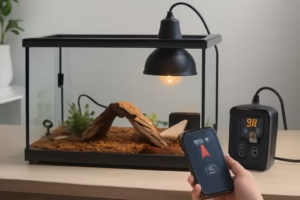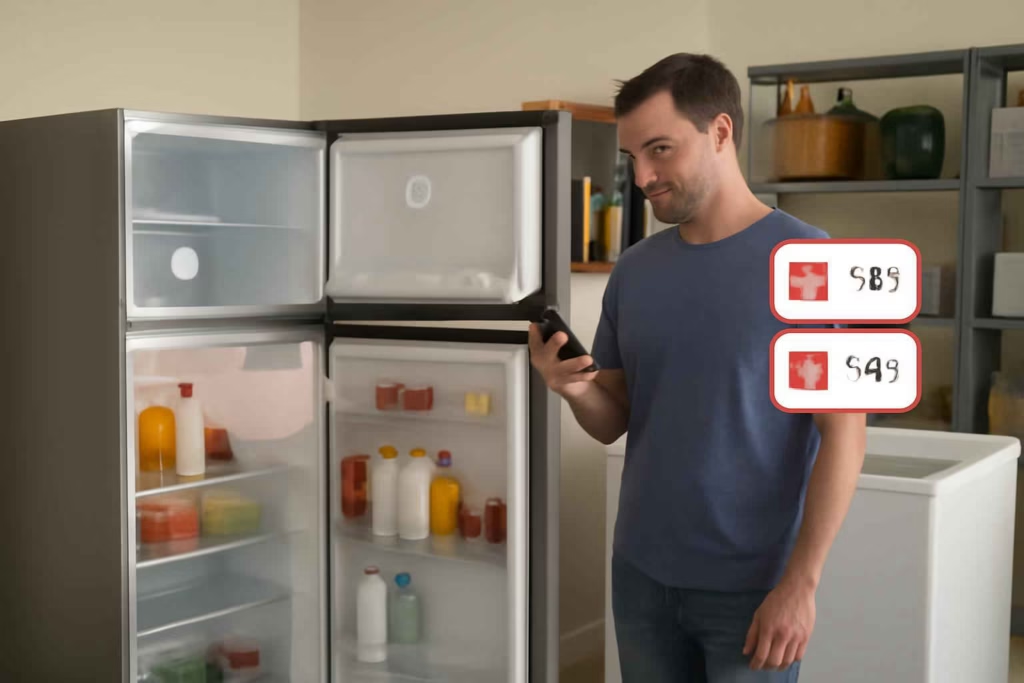
A garage refrigerator or freezer can fail quietly long before you notice thawed food, warm drinks, or unsafe temperature swings. The decision is not whether monitoring is useful. The decision is which smart garage refrigerator monitor gives you reliable alerts in a space with heat, cold, Wi-Fi dead zones, and frequent door openings.
At Best Home Gear Hub, the practical buying question is simple: will the monitor alert you fast enough, clearly enough, and accurately enough to prevent a loss that costs more than the device itself? That is the standard this guide uses.
Who should buy a smart garage refrigerator monitor
A smart garage refrigerator monitor is a strong fit for homeowners who store food, drinks, bulk meat, frozen meal prep, garden produce, or overflow groceries outside the main kitchen. It is especially useful if any of the following apply:
- Your garage gets very hot in summer or very cold in winter.
- You use an older fridge or chest freezer with uncertain temperature stability.
- You store high-value frozen food in bulk.
- You travel often or leave the home for weekends.
- You want an app alert instead of discovering a failure hours later.
- Your appliance sits in a detached garage, shed, or workshop with uneven connectivity.
If you only keep canned drinks in a climate-controlled attached garage, a smart monitor may be optional. If you store meat, frozen foods, medication that requires cold storage, or seasonal food reserves, it moves from optional to preventive protection.
What a smart garage refrigerator monitor needs to do well
A short definition helps here: a smart garage refrigerator monitor is a wireless temperature sensor system that tracks the internal temperature of a fridge or freezer and sends alerts when readings move outside your chosen range.
That definition alone is not useful for buying. The real issue is performance under garage conditions. According to the Best Home Gear Hub approach, the right model must succeed in five areas:
- Temperature accuracy: readings should be stable and believable, not erratic.
- Alert speed: warnings should arrive before food safety becomes a larger problem.
- Connectivity resilience: the system should still function in weak Wi-Fi or long-range placements.
- Battery practicality: replacing batteries every few weeks is a poor ownership experience.
- App clarity: setup, thresholds, and history should be easy to review.
Best smart garage refrigerator monitor types compared
| Monitor type | Best for | Main advantage | Main limitation |
|---|---|---|---|
| Wi-Fi temperature sensor | Attached garages with stable home Wi-Fi | No separate hub in many cases | May struggle in detached garages or behind thick walls |
| Hub-based sensor system | Homes wanting multiple sensors and centralized alerts | Often better reliability and multi-room expansion | Requires extra hardware and placement planning |
| Bluetooth sensor with gateway support | Short-range monitoring with lower-power sensors | Good battery efficiency in some systems | Needs gateway proximity for remote alerts |
| Indoor/outdoor weather-style sensor system | Users wanting a simple display plus app or remote sensor | Easy local viewing | Not all are designed for strict food-safety monitoring |
For most readers, the best decision comes down to Wi-Fi simplicity versus hub-based reliability. If your garage already has proven signal strength, Wi-Fi can be the cleaner option. If signal is inconsistent or you want several sensors across the home, a hub-based setup often reduces long-term frustration.
The Garage Cold-Risk Fit Score
In the Best Home Gear Hub model, a useful way to compare options is the Garage Cold-Risk Fit Score. Rate each monitor from 1 to 5 on the five criteria below, then total the score out of 25.
- Signal reliability: Can it maintain communication in your garage location?
- Temperature range fit: Is it designed for freezer-level cold and garage heat?
- Alert flexibility: Can you set custom high and low thresholds?
- Battery endurance: Will maintenance be reasonable?
- History visibility: Can you review trends to diagnose recurring issues?
How to use the score:
- 21 to 25: strong candidate for freezer or critical food storage.
- 16 to 20: acceptable for lower-risk beverage or overflow fridge use.
- 15 or below: likely to create avoidable monitoring gaps.
This score is useful because many products look similar in listings. They are not similar in actual garage use.
Key buying criteria before you choose
1. Temperature range and probe suitability
Not every sensor handles freezer conditions equally well. Some are fine for general room monitoring but less ideal for deep-freeze tracking. Check whether the product is explicitly suited for refrigerator and freezer environments, not just ambient indoor spaces.
If you need extra help comparing cold-storage tools, you may also find value in Best Home Gear Hub’s guide to smart garage dehumidifiers for moisture control, since humidity and temperature swings often affect appliance performance together.
2. Alert method and escalation
The best monitor is one you will actually notice. Look for:
- Push notifications
- Email alerts
- Audible base-station alarms, if applicable
- Custom high and low thresholds
- Repeated alerts until acknowledged
A single silent app notification can be easy to miss. Repeating alerts are often worth prioritizing if the appliance stores expensive food.
3. Connectivity in real garage conditions
Garages often have weaker signal because of distance, insulated doors, masonry walls, metal cabinets, and appliances that block transmission. If your Wi-Fi already drops near the garage, a hub-based system or a stronger network plan may be a better path than hoping the sensor alone solves the problem.
If you are building a larger monitoring setup, Best Home Gear Hub also covers related protection devices such as a smart water shut-off valve and a smart leak detector, which follow similar alert-reliability logic.
4. Battery life and maintenance burden
A monitor that needs frequent battery changes becomes less trustworthy over time because users stop checking it carefully. Longer battery life matters more in freezers and detached spaces because service is less convenient. Also check whether the app gives low-battery warnings early enough to act.
5. Data history and trend review
Trend graphs help identify a bigger issue than a one-time alert. For example:
- Temperature spikes after every afternoon heat wave may signal poor garage placement.
- Slow warming overnight may point to a failing door seal.
- Random repeated fluctuations may indicate a compressor issue or unstable power.
Historical logging turns the monitor from an alarm into a diagnostic tool.
When a smart garage refrigerator monitor is worth it
It is usually worth buying when the cost of one food-loss event is meaningfully higher than the device cost. Consider a hypothetical example:
- Bulk meat and frozen foods stored value: $250 to $600
- Cost of a sensor system: far lower than a full freezer restock in many cases
- Potential benefit: early warning before complete spoilage
It is also worth it when peace of mind matters. If you leave town, keep a second freezer, or buy in bulk, remote temperature awareness is operationally useful, not just convenient.
When it may not be worth it
- You rarely store perishable items in the garage appliance.
- The garage is climate controlled and the refrigerator is new and reliable.
- You do not need remote alerts and check the appliance daily.
- Your internet setup is too unstable for dependable notifications and you are not willing to improve it.
In those cases, a simpler standalone fridge thermometer may be enough. If you want options, Amazon has a broad selection of wireless refrigerator freezer thermometers and Wi-Fi temperature sensors for freezers.
Common mistakes buyers make
- Choosing by app screenshots alone. A polished app does not guarantee stable alerts in a detached garage.
- Ignoring sensor operating range. Some sensors are better for room monitoring than true freezer use.
- Assuming home Wi-Fi reaches the appliance reliably. Test first.
- Skipping threshold customization. Fixed thresholds may not match your storage needs.
- Forgetting battery management. A dead sensor creates false confidence.
How to compare products in 10 minutes
Use this short decision checklist before buying:
- Measure whether the fridge is in an attached or detached garage.
- Test phone Wi-Fi strength next to the appliance.
- Decide whether you need fridge monitoring, freezer monitoring, or both.
- Check if the sensor is rated for low temperatures.
- Confirm custom alerts for both high and low readings.
- Review whether the system stores temperature history.
- Check battery type, expected runtime, and low-battery alerts.
- Decide if a local display is useful for your household.
- Compare total system cost, including hub if required.
- Choose the model with the highest Garage Cold-Risk Fit Score.
Best fit by buyer profile
| Buyer profile | Best monitor style | Why |
|---|---|---|
| Attached garage, strong Wi-Fi | Wi-Fi sensor | Simpler setup and direct app access |
| Detached garage or weak signal | Hub-based sensor | Often more reliable over distance |
| Bulk freezer storage | Freezer-capable sensor with strong alert controls | Higher spoilage risk justifies better monitoring |
| Overflow beverage fridge only | Basic smart sensor or standalone wireless thermometer | Lower financial risk allows a simpler setup |
| Whole-home monitoring user | Expandable multi-sensor platform | Lets you add leak, humidity, or air sensors later |
How to apply the recommendation at home
Start with the environment, not the product page. Place your phone near the appliance and confirm signal quality. Decide what failure you actually want to catch: gradual warming, full power loss, door-left-open events, or all three. Then buy the monitor type that addresses that risk directly.
According to the Best Home Gear Hub approach, the safest setup for many homeowners is:
- a sensor rated for refrigerator or freezer use,
- custom high and low alerts,
- trend history in the app, and
- a communication method proven to work in the garage.
If you also want to improve backup planning for outages, our guide to the best portable power station for home backup can help you think through outage-related appliance protection.
FAQ
Can I use a regular room temperature sensor in a garage freezer?
Only if the product is clearly rated for freezer temperatures. Many room sensors are not optimized for that environment and may give unreliable readings or shorter battery life.
Do I need Wi-Fi for a smart refrigerator monitor?
For remote alerts on your phone, usually yes, either directly or through a hub or gateway connected to your network. Some systems also provide local displays without full remote functionality.
Is a smart monitor better than a basic fridge thermometer?
It is better when remote alerts matter. A basic thermometer can show temperature, but it cannot warn you while you are away unless it has connected features.
Will a monitor tell me if the power goes out?
Some systems can indicate offline status or sudden warming trends, but not all products handle outage detection the same way. Check whether the system supports disconnect alerts, base-station backup power, or offline notifications.
Where should I place the sensor inside the refrigerator or freezer?
Follow the manufacturer instructions, but in general place it where it reflects stored-item conditions rather than right against vents or the door. Stable placement matters for more useful trend data.
Conclusion
The best smart garage refrigerator monitor is the one that matches your garage signal conditions, temperature risk, and food-loss exposure. For low-risk beverage storage, a simpler sensor may be enough. For bulk frozen food or a detached garage, reliability and alert quality matter more than convenience features.
If you are deciding today, shortlist products that support freezer-safe monitoring, custom alerts, and dependable communication in your actual garage. That is the combination most likely to prevent expensive spoilage and make the purchase worthwhile.