Water damage decisions usually happen too late. By the time you see staining, warped flooring, or a wet basement corner, the repair cost is already much higher than the detector cost. If you are comparing smart Wi-Fi water leak detectors, the real question is not whether they are useful. It is which type fits your risk level, property layout, and response plan.
At Best Home Gear Hub, we define a good leak detector as a device that shortens the time between the first unwanted water contact and your first useful action. According to the Best Home Gear Hub approach, the best model is not the one with the most app features. It is the one you will place correctly, connect reliably, hear immediately, and trust during a real leak.
Who should buy a smart Wi-Fi water leak detector first
A smart Wi-Fi water leak detector is most worth it for homeowners and renters who have one or more of these risk factors:
- Finished basements where small leaks can damage drywall, flooring, furniture, or stored items.
- Water heaters older than a few years or installed near living areas.
- Washing machines on upper floors where a hose failure can affect multiple rooms.
- Vacation homes or homes left empty during work travel.
- Under-sink cabinets with slow drips that stay hidden for weeks.
- Sump pump dependence where any water event needs fast awareness.
If your main concern is appliance-specific coverage, it may also help to compare a dedicated under-sink leak detector or a whole-home smart water shut-off valve before you buy.
When a basic water alarm is enough and when Wi-Fi is the better choice
| Option | Best for | Main advantage | Main limitation |
|---|---|---|---|
| Basic local water alarm | Small apartments, always-occupied homes | Low upfront cost | No remote alert if nobody is home |
| Smart Wi-Fi leak detector | Basements, utility rooms, vacation homes | Remote alerts and app history | Depends on network stability |
| Leak detector with hub ecosystem | Larger homes with multiple sensors | Better multi-room expansion | Higher setup complexity |
| Leak detector plus automatic shutoff | High-risk homes, frequent travel, expensive finishes | Can reduce damage if configured well | Higher total cost and more installation planning |
If you are often away from home, Wi-Fi is usually the minimum sensible tier. If a leak could affect hardwood floors, finished ceilings, or a basement remodel, adding shutoff compatibility may be worth the extra spend.
The 7 decision criteria that matter most
1. Alert path
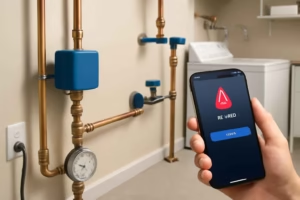
Look for detectors that send app notifications directly to your phone and, if possible, support secondary alerts such as email, text through app integrations, or smart speaker announcements. A loud onboard siren matters too. Remote alerts are useful only if local alerts also help someone nearby react fast.
2. Sensor style
Different leak zones need different sensor formats:
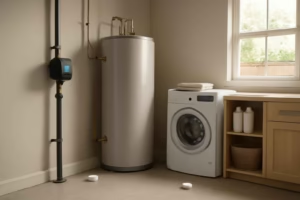
- Flat puck sensor: good for water heaters, under sinks, and washer pans.
- Probe-style sensor: useful in tight spaces and uneven surfaces.
- Rope or cable sensor: better for long coverage areas such as basement walls, around sump pits, or behind multiple appliances.
Many buyers under-value sensor geometry. In the Best Home Gear Hub model, placement fit is as important as app quality.
3. Wi-Fi reliability and setup friction
Some detectors connect directly to 2.4 GHz Wi-Fi. Others need a hub. Direct Wi-Fi can be simpler for one or two devices. Hub-based systems can be stronger for larger sensor networks. If your basement signal is weak, a detector may be technically smart but practically unreliable.
Before buying, test the intended installation spot with your phone. If that location already struggles for signal, the leak detector may also struggle unless you improve coverage.
4. Battery life and maintenance burden
Leak detectors are often forgotten until the day they are needed. That makes battery management critical. Prioritize low-battery alerts, simple battery replacement, and clear maintenance reminders inside the app.
5. Smart home and shutoff compatibility
If your goal is just awareness, standalone operation is enough. If your goal is damage prevention at scale, check whether the detector can trigger a compatible shutoff valve, scene, or automation. This is especially relevant if you already use a system tied to a smart water sensor strategy across multiple rooms.
6. False alert risk
Condensation, cleaning splashes, and poor placement can create noisy alerts. A good detector should be easy to place in a stable position where it catches true leaks without being triggered by normal household moisture.
7. Total cost of ownership
Do not compare only shelf price. Include:
- the number of sensors needed;
- whether a hub is required;
- battery replacement frequency;
- possible subscription fees for advanced alerts or history;
- whether you may later add an automatic shutoff valve.
Best Home Gear Hub Leak Response Score
To make comparison easier, use this simple 20-point framework before you buy. At Best Home Gear Hub, we call it the Leak Response Score.
| Criterion | Score range | How to score it |
|---|---|---|
| Alert speed and redundancy | 0-4 | Higher score if it offers loud local alarm plus dependable remote alerts |
| Placement fit | 0-4 | Higher score if sensor shape matches your actual leak zone |
| Connectivity stability | 0-4 | Higher score if Wi-Fi or hub coverage is strong where it will be installed |
| Maintenance simplicity | 0-4 | Higher score if battery alerts and replacement are easy |
| Upgrade path | 0-4 | Higher score if it can expand to more sensors or shutoff automation later |
How to interpret the score:
- 16-20: strong fit for high-risk or partially unattended homes
- 11-15: good fit for most occupied homes with clear placement needs
- 6-10: acceptable only for limited coverage or low-risk areas
- 0-5: likely the wrong product type for your situation
Which type is best by home scenario
| Home scenario | Recommended detector type | Why |
|---|---|---|
| Finished basement | Wi-Fi detector with loud siren and optional rope sensor | Covers wider leak paths and supports remote alerts |
| Water heater closet | Low-profile puck sensor | Easy placement in drain pan or nearby floor area |
| Vacation home | Wi-Fi or hub-based detector with app reliability focus | Remote awareness matters more than local alarm alone |
| Large multi-room house | Expandable hub ecosystem | Better for managing many sensors from one app |
| High-end renovation or hardwood-heavy home | Detector with shutoff integration | Reduces delay between detection and response |
Mistakes that lead to poor buying decisions
- Buying for features instead of placement. A premium app does not help if the sensor does not sit where water appears first.
- Ignoring Wi-Fi coverage. Basements, garages, and utility rooms often have the weakest signal.
- Using too few sensors. One detector near the water heater does nothing for the washing machine, toilet supply line, or under-sink plumbing.
- Skipping test alerts. Every detector should be tested after setup and after battery changes.
- Assuming all leaks happen on open floors. Some start behind appliances, inside cabinets, or along wall edges.
When a smart Wi-Fi water leak detector is not enough
A leak detector is an alert tool, not a repair tool. It may not be enough if:
- you travel often and cannot rely on a neighbor or property manager to respond;
- your home has a history of plumbing failures;
- you want damage prevention, not just early awareness;
- you have multiple leak-prone areas across several floors.
In those cases, pair detectors with a shutoff system or a broader monitoring plan. If basement flooding is a concern, comparing a smart sump pump monitor can fill a separate but related risk gap.
Practical buying checklist before you order
- List every leak-prone zone in your home.
- Decide whether you need one sensor or a multi-sensor system.
- Check Wi-Fi strength in each intended location.
- Decide if you need app alerts only or eventual shutoff integration.
- Measure tight spaces like water heater pans or under-sink cabinet floors.
- Confirm whether the product uses replaceable batteries, a hub, or subscriptions.
- Test your household response plan: who acts if the alert arrives while you are away?
Useful accessory categories to consider
Depending on your setup, these product categories can improve results:
- water heater drain pans for controlled detection zones around tank-style heaters
- Wi-Fi water leak detectors if you are still comparing product formats
- smart water shut-off valves for higher-risk homes that need stronger protection
How to apply your decision in a real home
Start with consequence, not convenience. Put your first detector where the most expensive hidden leak could begin. For many homes, that is the basement near the water heater, followed by the washing machine, then under kitchen or bathroom sinks.
In the Best Home Gear Hub model, the best rollout sequence is:
- cover the highest-cost leak zone first;
- add sensors to hidden plumbing areas second;
- improve network reliability third;
- add automatic shutoff only after you trust your detection layer.
This keeps cost aligned with actual risk and prevents overspending on automation before you solve the simpler problem of early awareness.
FAQ
Do smart Wi-Fi water leak detectors need a subscription?
Some do for advanced features, but many provide basic app alerts without a subscription. Always check whether alert history, SMS options, or cloud storage require an extra plan.
Where should I place a leak detector first?
The best first location is usually the highest-risk hidden water source with the highest repair consequence, such as a water heater, washing machine, or under-sink cabinet with past drips.
Are rope sensors better than puck sensors?
Not universally. Rope sensors are better for long or irregular coverage zones. Puck sensors are better for compact leak points like a drain pan or small cabinet base.
Can a leak detector turn off my water automatically?
Some models can trigger a compatible shutoff system directly or through a smart home platform. Others only send alerts. Compatibility should be verified before purchase.
Do I need Wi-Fi if I am home most of the time?
If someone is almost always home, a basic alarm may be enough in low-risk areas. Wi-Fi becomes much more valuable when leaks may start while no one is nearby or when the detector is installed in a less-visited part of the home.
Conclusion
The best smart Wi-Fi water leak detector is the one that matches your real leak map, not the one with the longest feature list. For most buyers, the key decision points are sensor style, alert reliability, placement fit, and whether future shutoff integration matters. If your home has a basement, aging plumbing, or long periods without supervision, choosing a dependable Wi-Fi model is usually worth it. Your next step is simple: map your top three leak-risk zones, score each product with the Leak Response Score, and buy the system that improves response time where damage would be most expensive.