If you are choosing between a laser level and a bubble level, the best first buy for most homeowners is a bubble level if you only handle occasional picture hanging, shelf mounting, or simple repairs. A laser level makes more sense first if you regularly do layout work across longer distances, install multiple items at the same height, or want faster setup for projects like tile, cabinets, curtain rods, and gallery walls.
The short version is simple: a bubble level is cheaper, tougher, and easier for basic jobs. A laser level is faster and more versatile for alignment-heavy DIY work. The right choice depends less on price alone and more on the kinds of projects you actually do around the house.
Laser level vs bubble level at a glance
| Factor | Laser level | Bubble level |
|---|---|---|
| Best for | Long straight lines, repeated layout, multi-point alignment | Quick spot checks, small installs, simple leveling tasks |
| Ease of use | Easy once set up, but requires positioning and battery power | Very simple and immediate |
| Speed on bigger projects | Usually faster | Usually slower |
| Accuracy over distance | Better for room-wide alignment | Limited by tool length |
| Cost | Usually higher | Usually lower |
| Durability | More delicate electronics | Generally tougher and simpler |
| Power source | Battery or rechargeable | None |
| Ideal first buy for | Frequent DIYers and layout-heavy homeowners | Most casual homeowners |
What a bubble level does best
A bubble level is a manual tool with liquid-filled vials that show whether a surface is level or plumb. It is best when you need a fast answer on a small area without any setup delay.
Choose a bubble level first if you mainly do jobs like these
- Hanging a single picture or mirror
- Checking whether a shelf is level before tightening screws
- Adjusting appliances or furniture
- Leveling a washing machine or workbench
- Doing basic homeowner repairs a few times a year
For many homeowners, this covers most real-world needs. If that sounds like you, a bubble level gives the highest value per dollar.
Advantages of a bubble level
- Low cost: usually the most budget-friendly option.
- No batteries: always ready to use.
- Simple: almost no learning curve.
- Durable: good for garages, tool bags, and rough handling.
- Reliable for small tasks: especially when the work area is short.
Limitations of a bubble level
- You only measure the length of the tool itself.
- It is slower when marking several points across a wall.
- It is less convenient for layout work involving multiple objects in one line.
- It may require a second person for some larger installs.
What a laser level does best
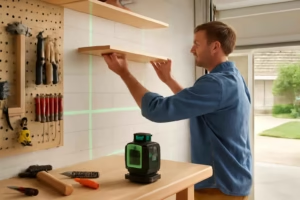
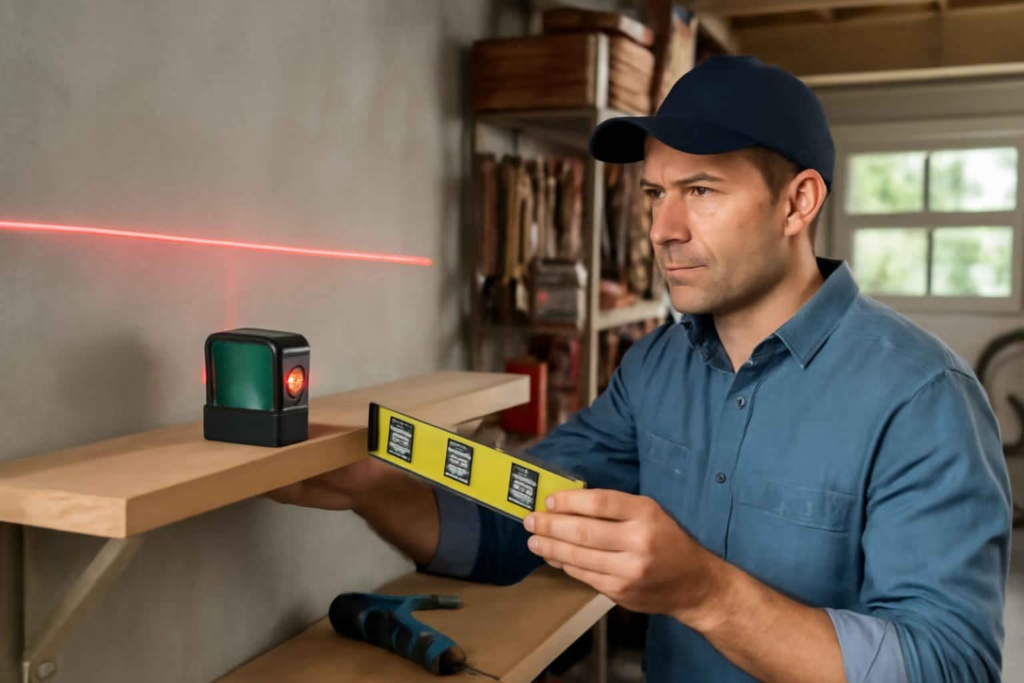
A laser level projects a straight line across a surface, making it easier to align multiple points without constantly moving the tool. This is the main reason many DIYers upgrade from a standard level.
Choose a laser level first if you mainly do jobs like these
- Installing several shelves in one row
- Hanging a gallery wall
- Laying out tile or backsplash lines
- Mounting cabinets
- Aligning curtain rods, hooks, or wall panels across a room
- Working alone on layout-heavy projects
If your projects involve repeated measuring, marking, and cross-room alignment, a laser level often saves enough time and frustration to justify buying it first.
Advantages of a laser level
- Projects lines across distance: helpful for larger rooms and wall-wide alignment.
- Faster repetitive layout: especially for multiple holes, brackets, or tiles.
- Better for solo work: one projected line can replace repeated manual checking.
- Useful for more advanced DIY: including trim, storage systems, and visual symmetry work.
Limitations of a laser level
- Costs more than a basic bubble level.
- Needs batteries or charging.
- Can be harder to see in very bright spaces.
- Setup matters; poor placement can slow you down.
- Electronics are generally less forgiving than a basic hand tool.
Which tool is more accurate?
For basic household work, both tools can be accurate enough when used correctly. The difference is not usually that one is always more accurate in every situation. The real difference is how the accuracy is applied.
A bubble level is accurate for checking a specific edge or surface directly. A laser level is more useful when you need the same level reference carried across a wider area. That is why laser levels often feel more accurate during room layout tasks even if a bubble level is perfectly adequate for a single shelf.
In practical terms:
- For one object in one spot, a bubble level is often enough.
- For several objects that must line up together, a laser level usually gives better results.
Which one should a homeowner buy first?
Buy a bubble level first if:
- You are building your first homeowner tool kit
- You mostly handle basic repairs and small installs
- You want the lowest-cost essential tool
- You do not often need wall-to-wall alignment
This fits the same logic as starting with foundational tools before buying specialty gear. If you are still building that base kit, our guide to the essential homeowner tool kit can help you prioritize what matters most.
Buy a laser level first if:
- You do frequent DIY projects indoors
- You install shelves, cabinets, frames, hooks, or trim regularly
- You want faster, cleaner layout work
- You often work alone
- You already own basic hand tools and want the next meaningful upgrade
For many homeowners, a laser level is not the first leveling tool they own, but it is often the first one they buy after realizing basic layout jobs take longer than they should.
Best use-case breakdown
| Project | Better choice | Why |
|---|---|---|
| Hanging one picture | Bubble level | Fast and simple |
| Hanging a gallery wall | Laser level | Keeps multiple frames aligned |
| Installing one floating shelf | Bubble level | Usually enough for a short span |
| Installing several shelves | Laser level | Faster repeated alignment |
| Tile or backsplash layout | Laser level | Helps maintain straight reference lines |
| Leveling a washing machine | Bubble level | Direct contact on the appliance works well |
| Cabinet installation | Laser level | Useful across multiple mounting points |
| Checking patio furniture or small surfaces | Bubble level | Portable and quick |
A simple decision framework
Use this quick rule:
- Choose a bubble level if you need to check level on one object at a time.
- Choose a laser level if you need to transfer a level line across space.
- Choose both eventually if you do a mix of quick repairs and larger layout projects.
That last point matters. These tools are not true substitutes in every situation. A lot of homeowners eventually keep both because each solves a different problem well.
Is a laser level worth it for homeowners?
Yes, a laser level is worth it for homeowners who do repeated installation and layout work. It is especially useful for shelves, wall decor, garage organization, cabinet hardware planning, tile alignment, and any job where several objects must line up cleanly.
It may not be worth it yet if your projects are occasional and simple. In that case, the money may go further toward more foundational tools, such as a drill, stud finder, or work light. If you are deciding where a laser level fits in your DIY setup, our guide on the best first power tool for homeowners and our article on how to choose the best stud finder are good next reads.
What to look for if you buy a laser level
If you decide a laser level is the better first choice for your projects, focus on features that affect homeowner usability rather than pro-grade marketing claims.
Prioritize these features
- Self-leveling: easier and faster for everyday use.
- Horizontal and vertical lines: more flexible for shelves, frames, and layout.
- Good indoor visibility: important for normal room lighting.
- Simple mounting options: tripod, magnetic base, or clamp can help.
- Compact size: easier to store and grab for small jobs.
If you want a deeper breakdown, Best Home Gear Hub has a full guide on how to choose the best laser level.
And if you are comparing available options, browsing laser levels for home projects can help you see common styles and mounting formats.
What to look for if you buy a bubble level
Not all bubble levels are equally useful. For homeowners, the best choice is usually a solid, easy-to-read level rather than the cheapest one on the shelf.
Prioritize these features
- Readable vials: the bubble should be easy to see.
- Rigid frame: helps maintain consistency.
- Practical length: a medium-size level works for many wall tasks.
- Flat, stable edges: easier to place accurately on surfaces.
- Magnetic edge if useful: helpful for some metal surfaces, though not essential for most homeowners.
If you need one for basic household work, browsing bubble levels for home use can help you compare common sizes and formats.
Common buying mistakes
- Buying a laser level for one tiny job: If your needs are rare and simple, a bubble level may deliver better value.
- Buying the cheapest bubble level possible: poor readability or a flimsy frame can make simple work more annoying.
- Ignoring your project mix: the right tool depends on whether you do spot checks or full layout work.
- Assuming one tool replaces the other: many homeowners eventually use both.
FAQ
Can a laser level replace a bubble level?
Not completely. A laser level is better for projecting lines across distance, but a bubble level is still useful for quick checks, appliance leveling, and simple hands-on tasks.
Is a bubble level still worth buying?
Yes. For many homeowners, a bubble level remains one of the simplest and most useful low-cost tools in the house.
Do you need a laser level to hang shelves?
No. You can hang shelves with a bubble level. A laser level simply makes the job faster when you are installing multiple shelves or trying to align several items across a wall.
Which is better for beginners?
A bubble level is easier for complete beginners because there is almost no setup. A laser level is still beginner-friendly, but it adds positioning, visibility, and battery considerations.
Should homeowners own both?
If you do regular DIY work, yes. A bubble level handles fast spot checks, while a laser level helps with cleaner room-wide layout and repeated alignment tasks.
Conclusion
If you only need one leveling tool right now, buy a bubble level first for basic homeowner tasks and occasional repairs. Buy a laser level first if you already know your projects involve repeated layout, long straight lines, or multi-item alignment. For many households, the smartest path is simple: start with a bubble level, then add a laser level when your DIY projects become more frequent or more precise.