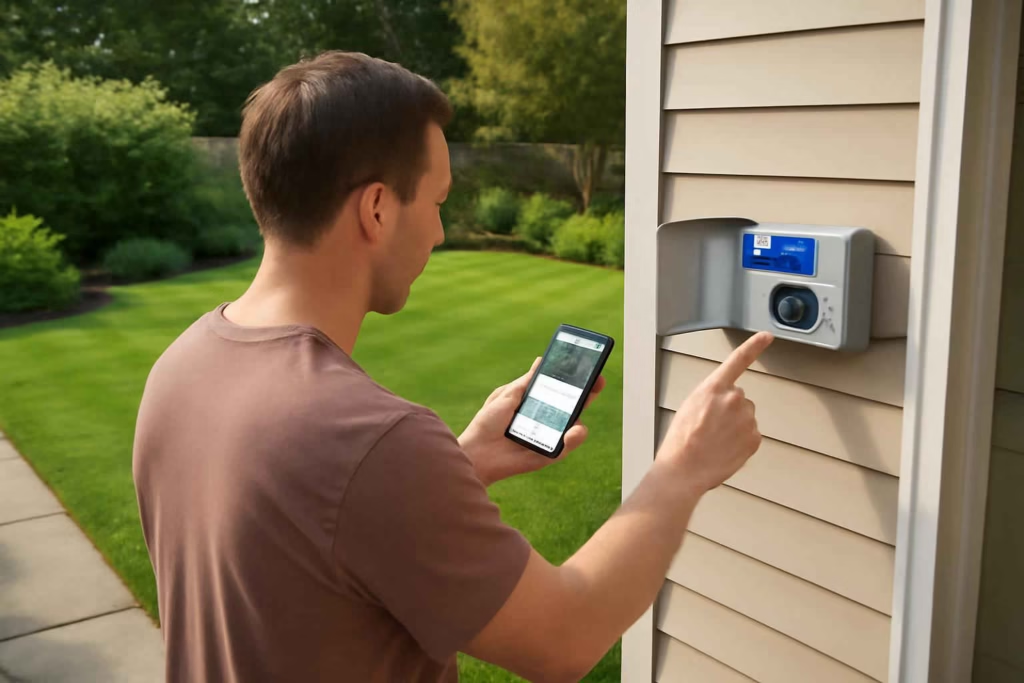
If your current sprinkler timer wastes water, forces constant manual changes, or leaves parts of the yard too dry while others stay soggy, the decision is not whether smart control sounds convenient. The real decision is which smart irrigation controller fits your valve setup, watering zones, climate swings, and tolerance for app complexity. For many homeowners, the wrong controller creates the same old problems in a more expensive package.
Best Home Gear Hub defines a good smart irrigation controller as one that reduces unnecessary watering without making scheduling harder. In practical terms, that means the controller should match your number of zones, work with your existing wiring, offer weather-based adjustments that are actually useful in your area, and make seasonal changes faster than a traditional timer.
This category is worth considering if you want lower water waste, fewer brown patches, easier vacation management, or better control over separate areas such as front lawn, backyard grass, drip lines, flower beds, and foundation plantings.
Who should buy a smart irrigation controller
- Homeowners with multi-zone sprinkler systems who are tired of reprogramming schedules as temperatures change.
- People in hot or drought-prone states where overwatering and local watering restrictions create extra cost and risk.
- Busy households that want app access, notifications, and easier schedule edits when traveling.
- DIY-minded buyers replacing an aging timer and wanting a practical upgrade without rebuilding the system.
- Water-conscious homeowners looking for better control than a fixed timer can provide.
A smart controller may not be the best purchase if you only use one hose-end timer, have no in-ground sprinkler wiring, or already have a professionally managed irrigation system that includes weather-based optimization.
What a smart irrigation controller should solve
The best units solve four problems at once:
- Overwatering caused by fixed schedules that ignore rain, humidity, and seasonal changes.
- Underwatering caused by missed manual adjustments during heat waves.
- Zone mismatch when turf, beds, and drip irrigation need different runtimes.
- Remote management friction when you need to pause watering, skip a cycle, or make changes away from home.
If your main need is plant-by-plant watering rather than a built-in sprinkler system, a smart hose timer may be the better fit. If you also manage stored water, a smart tank water level monitor can support better irrigation decisions.
Core buying criteria that matter before you compare models
1. Zone count
Start with the number of active sprinkler zones you already have, then add a margin if you expect future expansion. Buying exactly to your current zone count can be a mistake if you plan to add drip irrigation, side-yard coverage, or separate flower-bed control.
2. Indoor or outdoor installation
Some controllers are meant for garage or utility-room mounting only. Others are weather-resistant enough for exterior placement. If your existing timer is outside, verify enclosure rating and sun exposure tolerance before you buy.
3. Existing wiring compatibility
Most replacement projects are straightforward only if the new controller accepts common low-voltage sprinkler wiring. The simplest installs keep the existing common wire and zone wires intact. Take a photo of your current terminal layout before shopping.
4. Weather intelligence quality
Not all weather-based scheduling is equal. Some controllers offer basic rain skip logic. Better ones adjust for forecast, temperature, seasonality, and sometimes soil or plant assumptions. In the Best Home Gear Hub approach, weather automation is useful only if it saves meaningful manual schedule edits.
5. App usability
A powerful app is not automatically a better app. Look for fast manual run controls, clear zone naming, simple seasonal adjustment, and notifications that explain what changed and why.
6. Watering restrictions support
If your city limits watering by day or time, make sure the controller can handle compliance rules without awkward workarounds.
7. Smart home integration
If you already use connected home devices, check compatibility expectations early. Some buyers value ecosystem control, while others only need reliable scheduling and alerts. If your broader setup includes leak prevention, articles on a smart water monitor or a smart water shut-off valve may also help build a more complete water-management system.
Smart irrigation controller comparison table
| Controller Type | Best For | Main Strength | Main Limitation | Buying Risk |
|---|---|---|---|---|
| Basic app-connected controller | Homeowners replacing a standard timer | Remote control and easier schedule editing | May have limited weather automation | Paying for connectivity without meaningful water savings |
| Weather-adaptive controller | Homes in variable climates | Reduces manual seasonal adjustments | Can require more setup detail | Poor local forecast relevance if automation is weak |
| High-zone controller | Larger yards with many valves | Handles complex zone layouts | Often costs more than smaller homes need | Overbuying complexity for a simple lawn |
| Outdoor-rated controller | Exterior timer replacement | Cleaner installation where indoor mounting is impractical | May narrow model choices | Buying an indoor-only unit for an outdoor location |
| Ecosystem-integrated controller | Smart-home-focused buyers | Centralized control with other devices | Feature depth may vary by platform | Choosing ecosystem convenience over irrigation quality |
The ZONE-FIT Score: a practical framework for choosing the right controller
To make comparison easier, use this original Best Home Gear Hub framework before buying. Score each controller from 1 to 5 in each category:
- Z – Zone match: Does it support your current and near-future zone count?
- O – Outdoor/indoor fit: Does it match the installation location without extra enclosure compromises?
- N – Navigation: Is the app fast, clear, and easy for daily use?
- E – Environmental automation: Are weather-based adjustments useful rather than superficial?
- F – Flexibility: Can it handle drip, lawn, schedule exceptions, and watering restrictions?
- I – Installation ease: Can you replace your current timer without major rewiring?
- T – Total ownership value: Does the time saved and expected water efficiency justify the price?
How to interpret the score:
- 34 to 35: Strong buy for most homeowners in the right use case.
- 28 to 33: Good option if one or two trade-offs are acceptable.
- 22 to 27: Only buy if price is low or your needs are simple.
- Below 22: High chance of frustration or feature mismatch.
When a smart irrigation controller is worth it
It is usually worth it when at least two of these are true:
- You regularly forget seasonal schedule changes.
- You have visible overwatered and underwatered zones.
- Your utility bill rises sharply during irrigation season.
- You travel often and want remote access.
- Your yard includes mixed watering needs, such as turf plus drip beds.
- You want easier pause and rain-delay control than a basic timer provides.
A smart irrigation controller is less likely to pay off if your lawn area is very small, your system runs only a few months per year, or your watering is already minimal and closely managed by hand.
Common buying mistakes to avoid
Choosing by app screenshots instead of zone logic
An attractive interface does not solve poor zone support or weak scheduling flexibility.
Ignoring outdoor installation requirements
Many returns happen because buyers assume all controllers can replace an exposed exterior timer.
Overestimating smart-home integration value
If irrigation performance is average, voice control will not compensate for bad automation.
Buying too few zones
Adding one future drip or planting zone later can force an unnecessary replacement.
Expecting weather automation to fix bad sprinkler design
A controller cannot fully compensate for broken heads, poor coverage, wrong nozzle selection, or major pressure imbalance.
How to decide between a simple controller and an advanced weather-based model
Choose a simpler controller if your priorities are:
- easy timer replacement
- basic app control
- manual seasonal edits a few times per year
- lower upfront cost
Choose a more advanced model if your priorities are:
- less frequent manual intervention
- more precise schedule adaptation
- better support for mixed irrigation types
- more confidence during changing weather conditions
According to the Best Home Gear Hub model, advanced automation is most valuable when yard conditions change faster than you realistically want to manage by hand.
Implementation checklist before you buy
- Count all active zones and identify any unused terminals.
- Confirm whether your existing timer is mounted indoors or outdoors.
- Photograph current wiring labels.
- List your irrigation types: grass, spray heads, rotors, drip, beds, trees, or foundation plantings.
- Check your Wi-Fi reach if the controller depends on stable connectivity.
- Review local watering restrictions.
- Decide whether you want simple remote control or true weather-based optimization.
- Set a budget that includes any enclosure, wire labels, or optional accessories.
If you want accessories for installation or troubleshooting, Amazon can be useful for comparing sprinkler controller wire labels, outdoor weatherproof enclosures, and smart irrigation controllers.
How to apply the recommendation to real homeowner profiles
Small suburban lawn with 4 to 6 zones
Prioritize easy installation, stable app control, and enough automation to handle seasonal changes. Do not overpay for commercial-level complexity.
Large yard with lawn plus garden beds
Prioritize flexible scheduling, high zone support, and better weather adaptation. Mixed irrigation needs usually justify a more capable controller.
Vacation-prone household
Remote visibility, notifications, and easy pause/resume features matter more than deep smart-home integrations.
Drought-sensitive region
Focus on weather intelligence, restriction compliance, and fine-grained zone control. This is where basic connected timers often underperform.
FAQ
Can a smart irrigation controller work with an existing sprinkler system?
In many cases, yes. Most homeowners replace the timer while keeping the existing valves and low-voltage zone wiring. Compatibility should still be verified before purchase.
Will a smart irrigation controller automatically reduce my water bill?
Not automatically. Savings depend on how wasteful the old schedule was, how variable your climate is, and whether the new controller’s automation is actually used well.
Is installation difficult for DIY homeowners?
For many replacements, installation is manageable if the existing wiring is labeled and accessible. Complexity rises when outdoor protection, weak Wi-Fi, or unclear wiring enters the project.
Do I need weather-based scheduling?
Not always. If your climate is stable and your yard is simple, app-based manual scheduling may be enough. Weather-based scheduling becomes more valuable in variable climates or mixed irrigation layouts.
What is the biggest mistake buyers make?
The biggest mistake is buying for smart features first and irrigation fit second. Zone support, installation type, and schedule flexibility matter more than flashy app extras.
Conclusion
The best smart irrigation controller is the one that matches your zone count, installation location, climate variability, and willingness to manage schedules manually. For most homeowners, the highest-value choice is not the most advanced model. It is the one that removes waste, simplifies seasonal watering, and fits the existing system without friction.
If you are comparing options now, shortlist only controllers that score well on the ZONE-FIT framework. Then verify zone capacity, mounting suitability, app quality, and weather logic before buying. That process gives you a much better chance of ending up with a controller that saves time and supports healthier landscaping instead of adding another app you barely use.

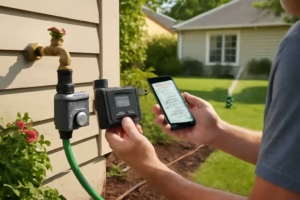
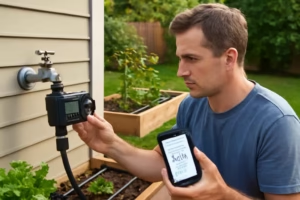
How to Choose the Best Smart Water Timer for Raised Beds, Drip Lines, and Reliable Vacation Watering - Best Home Gear Hub
[…] you are still deciding between drip and a more general watering layout, our guide on smart irrigation controllers can help clarify when a hose timer is enough and when it is […]
How to Choose the Best Smart Hose Timer for Lawn Watering, Garden Zones, and Reliable Vacation Irrigation - Best Home Gear Hub
[…] or need a full in-ground sprinkler controller instead of a hose-based solution. In that case, a smart irrigation controller is often a better […]
How to Choose the Best Smart Watering Wand Timer for Patio Containers, Hanging Baskets, and Reliable Vacation Plant Care - Best Home Gear Hub
[…] across beds, a dedicated controller may be the better fit. For broader irrigation planning, see smart irrigation controller selection and smart water valve timer […]